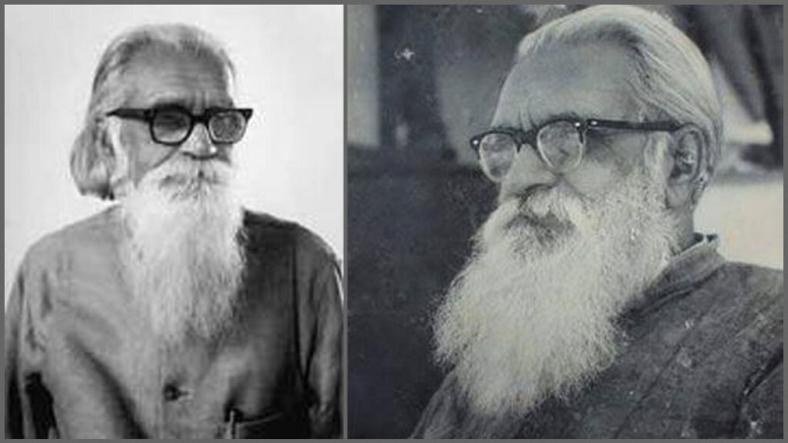
Kaka Kalelkar, born Ganesh Vasudev Kalelkar on June 1, 1895, was a distinguished Indian educationist, social reformer, journalist, freedom fighter and a close associate of Mahatma Gandhi. Known popularly as “Kaka” due to his warm and affectionate personality, he played a vital role in shaping India’s early education policies, promoting social justice, and strengthening the foundation of independent India through his writings and reform work.
His contributions—especially in education, Gandhian philosophy, rural upliftment and social harmony—continue to influence public policy and socio-cultural thought in India.
Early Life and Education
Kaka Kalelkar was born in the Satara district of present-day Maharashtra. He spent his childhood in a modest environment where he developed an early interest in literature, culture, and social issues. His early schooling took place in his hometown before he moved to Mumbai, where he completed his higher education.
Kalelkar attended Wilson College, Mumbai, a well-known institution that played a significant role in shaping many Indian reformers of that era. He graduated from the University of Mumbai, where he was deeply influenced by Indian philosophy, emerging social movements, and the idea of cultural renaissance.
This period of academic exposure helped him cultivate a lifelong passion for teaching, literature and social transformation.
Career as an Educationist
One of Kaka Kalelkar’s most notable contributions was in the field of education. He believed that true national development could only be achieved through a strong, value-based education system that encouraged self-reliance, moral character and cultural identity.
1. Advocate of Basic Education
He supported Gandhiji’s Nai Talim (Basic Education) philosophy, which emphasized learning through practical activity, community involvement, and holistic development. Kalelkar actively worked to reform curricula and teaching methods, ensuring they were relevant to Indian realities.
2. Promotion of Indian Languages
Kalelkar was a strong advocate of Indian languages. He believed that learning in one’s mother tongue fostered deeper understanding and cultural pride. Through his writings and lectures, he encouraged linguistic harmony and emphasized the importance of preserving India’s rich linguistic heritage.
3. Educational Administration
He was involved with several national-level educational committees and institutions, contributing to policy-making during the formative years of independent India. His ideas influenced curriculum design, teacher training programs and community-based education models across the country.
Social Reform and Advocacy
Kalelkar’s work extended beyond education into broader social reform.
1. Addressing Caste Discrimination
He strongly advocated for social justice and equality. Kalelkar worked extensively to reduce caste-based discrimination and uplift marginalized communities. His approach was rooted in Gandhian principles of harmony, dignity of labor, and compassion.
He emphasized that social transformation required both policy-level changes and community-level awareness, and his writings often highlighted the importance of bridging social divides.
2. Rural Development
Following Gandhiji’s footsteps, Kalelkar encouraged the development of rural India. He believed villages were the heart of the nation and that sustainable national progress could only be achieved by empowering rural communities through:
- education
- cottage industries
- cooperative movements
- economic self-reliance
His work inspired many grassroots development initiatives in the early years of independent India.
Role in the Indian Independence Movement
Kaka Kalelkar was an active participant in the Indian independence movement. His association with Mahatma Gandhi placed him at the forefront of several campaigns for political freedom and social reform.
1. Support for Non-Violent Movements
Kalelkar supported Gandhiji’s philosophy of non-violence (Ahimsa) and Satyagraha. He participated in constructive programs aimed at encouraging self-reliance, national unity, and ethical citizenship. His involvement in the movement helped mobilize young Indians towards education, social upliftment and moral responsibility.
2. Work During the Freedom Struggle
Throughout the freedom struggle, Kalelkar used his skills as a writer, speaker, and organizer to promote Indian independence. His work often involved:
- spreading awareness
- promoting nationalistic education
- strengthening community organizations
- supporting Gandhian initiatives for social harmony
Association with Mahatma Gandhi
Kalelkar’s relationship with Mahatma Gandhi was one of deep respect and philosophical alignment. He worked closely with Gandhi at the Sabarmati Ashram, learning from his values of simplicity, truth, and service.
1. Influence of Gandhian Principles
Gandhi’s influence on Kalelkar can be seen in:
- his commitment to rural upliftment
- his focus on value-based education
- his dedication to social justice
- his belief in non-violence and self-reliance
- his simple lifestyle
Kalelkar served as one of the strong intellectual pillars of the Gandhian movement. His writings, speeches, and reforms reflected Gandhian thought adapted for education and social transformation.
Google Ad 1
Chairman of the First Backward Classes Commission (1953)
One of the most important roles Kaka Kalelkar played in post-independence India was serving as the Chairman of the First Backward Classes Commission, appointed in 1953 by the Government of India.
1. Purpose of the Commission
The commission was established to:
- identify socially and educationally backward classes
- recommend solutions to reduce inequalities
- propose measures for their upliftment
2. Key Recommendations
Kalelkar’s commission emphasized:
- improving access to education
- enhancing economic opportunities
- strengthening social participation
- reducing caste-based discrimination
Though the government did not fully implement the commission’s report, it laid the foundation for later policies aimed at social inclusion and affirmative action.
Journalism and Writing
Kaka Kalelkar was also an influential writer and journalist.
1. Focus of His Writings
His articles and books focused on:
- education and its role in nation-building
- social justice and caste reform
- Gandhian philosophy
- Indian culture and values
- rural development
His writing style was simple, persuasive, and rooted in moral clarity. Through print media, he reached thousands of readers and helped shape public opinion on critical national issues.
Awards and Recognition
Kaka Kalelkar’s lifelong service earned him widespread respect.
He was awarded the Padma Vibhushan in 1964, India’s second-highest civilian award, in recognition of his contributions to education, literature, and social reform.
Legacy and Impact
Kaka Kalelkar’s life work has left a lasting mark on India’s educational and social landscape.
1. His Legacy Includes:
- pioneering reforms in Indian education
- promoting mother-tongue learning and cultural preservation
- advocating for social equality and justice
- shaping early national policies for backward classes
- strengthening Gandhian principles in public life
- mentoring generations of educators, activists, and reformers
Kalelkar remains an inspiring figure whose ideas continue to guide India’s journey toward equality, social harmony and value-based education.
Conclusion
Kaka Kalelkar’s contributions to education, social reform, journalism and national development make him one of the most respected figures in modern Indian history. His association with Mahatma Gandhi, his leadership in reform movements, and his efforts to uplift marginalized communities reflect his unwavering commitment to building a just and ethical society.
His life stands as a reminder that true nation-building requires both compassion and courage, and that education remains the most powerful tool for social transformation.
Thanks for reading this detailed biography. For more articles on inspiring personalities, explore more stories on PeoplesBLOG.