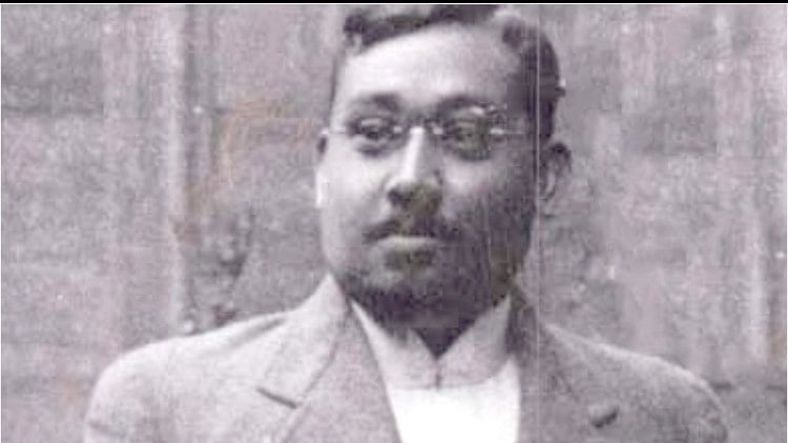
Rash Behari Bose (1886–1945) was one of India’s boldest and most influential revolutionaries. Though his name is not as widely known as some other freedom fighters, his work had a massive impact on India’s independence struggle. He played a key role in the Ghadar Movement, inspired countless young revolutionaries, and laid the foundation for the Indian National Army (INA), which later became famous under Subhas Chandra Bose’s leadership.
This article explores Rash Behari Bose’s life, contributions, legacy and why he remains one of the greatest freedom fighters India has ever produced.
Early Life and Background
Rash Behari Bose was born on May 25, 1886, in Subaldaha, a small village in Bengal (present-day Bangladesh). He grew up in a middle-class Bengali family that valued education and culture. From a young age, Bose was deeply influenced by the nationalist wave that was spreading across India.
His schooling and early youth exposed him to strong patriotic ideas. The injustices of British rule made him determined to do something meaningful for India’s freedom.
Early Activism and Entry into the Freedom Struggle
Rash Behari Bose’s journey as a revolutionary began during his student days. He associated himself with nationalist groups active in Bengal at the time, especially during the Swadeshi Movement.
However, he soon realized that peaceful protests alone were not enough to end British rule. This belief pushed him deeper into underground revolutionary activities.
Role in the Ghadar Movement
One of Rash Behari Bose’s biggest contributions to India’s freedom struggle came through the Ghadar Movement.
The Ghadar Movement was a revolutionary effort started by Indian immigrants, mainly in the USA and Canada, who wanted to overthrow British colonial rule through armed rebellion.
Rash Behari Bose secretly coordinated with the Ghadar leaders and played a key role in organizing the 1915 uprising, which aimed to spark a nationwide revolt against the British. Although the uprising did not succeed due to leaks in the plan, it cemented Bose’s place as a fearless revolutionary.
Once the British identified him as a major conspirator, he was forced to flee India.
Exile in Japan – New Beginnings
Rash Behari Bose escaped to Japan in 1915 with the help of friends and sympathizers. Japan became his home for the rest of his life. Although he lived in exile, he never stopped working for India’s independence.
In Japan he:
- built strong connections with political leaders
- gained support from Japanese organizations
- continued raising awareness about India’s struggle
- worked with Indians living abroad
- searched for ways to challenge British rule from outside India
During this time, he also married a Japanese woman, blended into Japanese society and earned deep respect for his dedication and discipline.
Formation of the Indian Independence League
While in Japan, Rash Behari Bose founded and organized the Indian Independence League (IIL). The IIL became the main organization representing Indian nationalists living in East and Southeast Asia.
The League played a crucial role in bringing Indians abroad together for a unified cause—India’s complete freedom. Rash Behari Bose used the IIL to build a political base that would later support the formation of the Indian National Army.
The Beginning of the Indian National Army (INA)
One of Rash Behari Bose’s greatest achievements was laying the foundation of the Indian National Army (INA).
During World War II, many Indian soldiers captured by Japan expressed the desire to fight against the British. Rash Behari Bose recognized this opportunity and helped form the INA with the support of the Japanese government.
He worked tirelessly to:
- organize Indian soldiers
- coordinate with Japanese officials
- establish political leadership
- create a clear goal of liberating India
Although Rash Behari Bose was the initial guiding force, he believed the movement needed a stronger leader with mass appeal.
This belief led to the next historic moment.
Google Ad 1
Inviting Subhas Chandra Bose to Lead the INA
Rash Behari Bose personally invited Subhas Chandra Bose (no relation) to take charge of the INA.
He understood that Subhas Chandra Bose had the charisma, leadership and popularity needed to lead a large and motivated army. When Subhas Chandra Bose arrived, Rash Behari Bose handed over the leadership of the INA and the Indian Independence League to him with complete trust and humility.
This transition changed the course of India’s freedom struggle. Subhas Chandra Bose’s leadership gave the INA global recognition, but the foundation had already been built by Rash Behari Bose years earlier.
For this reason, many historians call him “The Father of the Indian National Army.”
Later Years and Death
Rash Behari Bose lived his final years in Japan. Even though he was far away from India, his heart and mind remained dedicated to its freedom. He continued guiding Indian nationalists until his health declined.
He passed away on January 21, 1945, in Tokyo.
Japan honored him as a national hero, and India remembers him as one of its most determined and visionary revolutionaries.
Legacy of Rash Behari Bose
Rash Behari Bose’s contributions are immense and lasting:
1. A Pioneer of the Revolutionary Movement
He inspired generations of young Indians to think beyond petitions and peaceful protests. His courage encouraged many to join the freedom struggle.
2. Architect of the INA
Without Rash Behari Bose’s early groundwork, the INA would not have taken shape.
3. Global Awareness of India’s Struggle
He internationalized the Indian freedom movement by building political support in Japan and Southeast Asia.
4. A Symbol of Determination
Despite living far from home and facing hardships in exile, he never gave up the fight for India’s freedom.
5. A Bridge Between India and Japan
His life strengthened cultural and political ties between the two countries, many of which continue even today.
Why Rash Behari Bose Must Be Remembered
Rash Behari Bose’s name may not always appear in school textbooks as prominently as other leaders, but his role was critical in weakening British power.
He was:
- fearless
- committed
- visionary
- strategic
- and deeply patriotic
His sacrifices and contributions played a major part in shaping the final phase of India’s freedom struggle.
Conclusion
Rash Behari Bose was not only a revolutionary but a strategist, organizer and patriot whose work transformed India’s fight for independence. From the Ghadar Movement to the Indian National Army, his influence can be seen across major turning points in our history.
His life teaches us the value of courage, dedication and the willingness to fight for justice—even from thousands of miles away.
Thanks for reading about this great personality on PeoplesBLOG. For more inspiring stories of great people, continue exploring our PeoplesBLOG articles.


