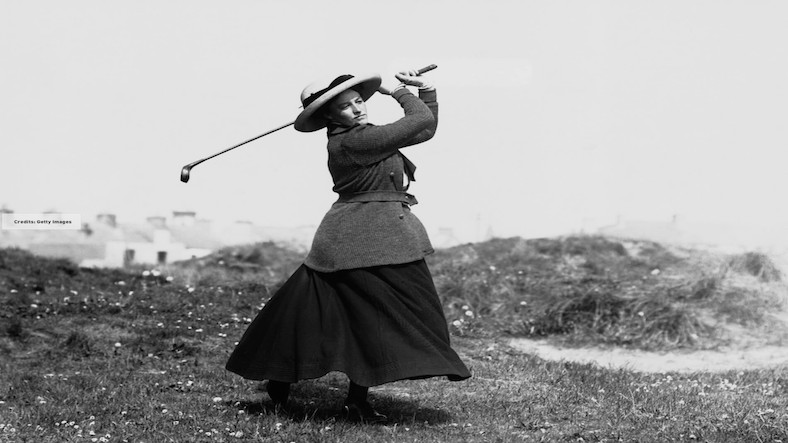
Margaret Abbott (1878–1955) holds a very special place not only in American sports history but also in the history of the Olympic Games. She became the first American woman to win an Olympic event, doing so at a time when women’s sports were barely recognized. Her victory at the 1900 Summer Olympics in Paris places her among the earliest pioneers of women athletes. Yet, for decades, even she did not know that she had become an Olympic champion.
This article explores her life, her achievement, the unusual circumstances of the 1900 Olympics, and why her story matters today.
Early Life and Background
Margaret Ives Abbott was born on June 15, 1878, in India. Her parents were American, and her father worked overseas. After his passing, her mother, Mary Abbott, who was a writer, moved the family back to the United States. They settled in Chicago, a city that later shaped much of Margaret’s personal and sports life.
Growing up in Chicago, Margaret was introduced to a vibrant cultural environment. Her mother was a respected literary figure who interacted with well-known writers and intellectuals. This atmosphere encouraged Margaret to be confident, curious, and open to new ideas.
Margaret Abbott was also athletic. She took interest in sports at a time when many women were discouraged or even prevented from being active in competitive activities. Golf, which was becoming popular in American upper-class circles, attracted her attention. She began learning the game under experienced coaches and soon became a talented amateur golfer.
The Road to the 1900 Olympics
The Olympic Games as we know them today did not exist when Margaret Abbott played golf in Paris in 1900. The first modern Olympics had been held only four years earlier in Athens. The second modern Olympics, held in Paris, were very different from today’s well-organized global tournaments.
The 1900 Games were scattered across several months and were part of the Paris Exposition, a world fair meant to celebrate art, culture, science, and technology. Many athletes, including Margaret Abbott, did not even know they were participating in an Olympic event. To them, it simply felt like a series of sports competitions organized during the fair.
In 1900, Margaret Abbott traveled to Paris with her mother. She took lessons from a well-known golf instructor and soon heard about a women’s golf competition at the Compiegne Golf Club. The event was advertised as part of the Exposition’s sports program, and Margaret decided to take part.
The Golf Competition at the 1900 Olympics
The women’s golf event at the 1900 Paris Olympics was a nine-hole tournament. Unlike modern Olympic golf events, which span several days and follow strict rules, this tournament was simple and straightforward.
Margaret Abbott competed against about ten other women. Many of them were experienced golfers from Europe and America. She played confidently, finishing the course with a score of 47, the best among all competitors.
Her victory earned her a unique prize: a porcelain bowl. At that time, medals were not always given to winners, and many competitions awarded different items instead of gold, silver, or bronze medals.
What Margaret did not realize was that this event would later be recognized as an official Olympic sport and that she had, in fact, made history.
Why Her Win Was Historically Important
Margaret Abbott became the first American woman to win an Olympic event, a record that still stands proudly. However, the significance of her achievement was not understood until many decades later.
The reasons were unusual:
- The 1900 Olympic Games were poorly organized and confusing.
- Many events were not officially labeled as Olympic competitions.
- Records from the period were incomplete or scattered.
- Margaret Abbott herself never claimed to be an Olympian because she simply did not know she was one.
Because of these factors, her victory remained hidden from the public for a long time. She passed away in 1955 without realizing she was the first American woman to win an Olympic event.
Google Ad 1
Life After the Olympics
After winning in Paris, Margaret Abbott returned to the United States and continued to enjoy sports, especially golf. She never turned professional but remained active in the sport and supported women’s participation in athletics.
She later married Finley Peter Dunne, a famous American humorist and writer known for his political satire. Dunne was well-connected in literary circles, and together the couple became part of Chicago’s cultural and intellectual society. They had a son and continued to lead an active and socially engaged life.
Margaret did not pursue a public sports career or seek recognition for her achievements. She remained largely unknown in sports history for many years.
Rediscovery of Her Olympic Legacy
It was only much later, in the late twentieth century, that researchers uncovered the truth about the 1900 Paris events. Historians studying early Olympic records discovered that Margaret Abbott had won the women’s golf event. They also found that the event was officially part of the Olympic Games, even if it was not clearly labeled at the time.
This discovery brought Margaret Abbott the recognition she never experienced during her lifetime. Today, her name is proudly listed as the first American woman to win an Olympic event.
Her story is a reminder of how much the Olympic Games have changed. It also shows how many women athletes have made important contributions, even when society was not ready to appreciate them.
The Olympics and Women’s Sports in 1900
To better understand the importance of Margaret Abbott’s achievement, it is useful to look at the conditions under which women competed in sports at the time.
- Very few women were allowed to participate in competitive sports.
- Public attitudes often discouraged women from physical activity.
- The early Olympic Games included only a handful of women’s events.
- Women who did compete were rarely recognized or rewarded properly.
Margaret Abbott’s participation was therefore a significant step forward for women in sports. She competed confidently and proved that women could excel in international competitions.
Her story also helps highlight how far women’s sports have come since 1900. Today, women compete in almost every Olympic event, enjoy equal recognition, and serve as role models for young athletes around the world.
Why Margaret Abbott’s Story Still Matters
Margaret Abbott’s story is more than just an interesting sports fact. It carries valuable lessons for today’s readers, especially young athletes and women interested in sports.
Her life shows that:
- Achievements do not always receive immediate recognition, but they still matter.
- Historical events can be misunderstood or forgotten without proper documentation.
- Women have been contributing to sports long before they were given equal rights or visibility.
- Passion, courage, and talent can create a lasting legacy even without fame.
Margaret Abbott remains a symbol of early women’s participation in athletics and a pioneer who unknowingly became part of Olympic history.
Conclusion
Margaret Abbott’s life and achievement are remarkable reminders of how much sports, society, and the Olympics have changed over the past century. As the first American woman to win an Olympic event, she broke barriers at a time when opportunities for women were extremely limited. Although she did not know she was an Olympic champion, history now recognizes her as a trailblazer.
Her story is important not just for sports lovers, but for anyone interested in history, gender equality, and inspiring achievements.
Thank you for reading this detailed article on PeoplesBLOG. If you want to learn about more inspiring personalities and forgotten stories from history, explore our other articles on the blog.