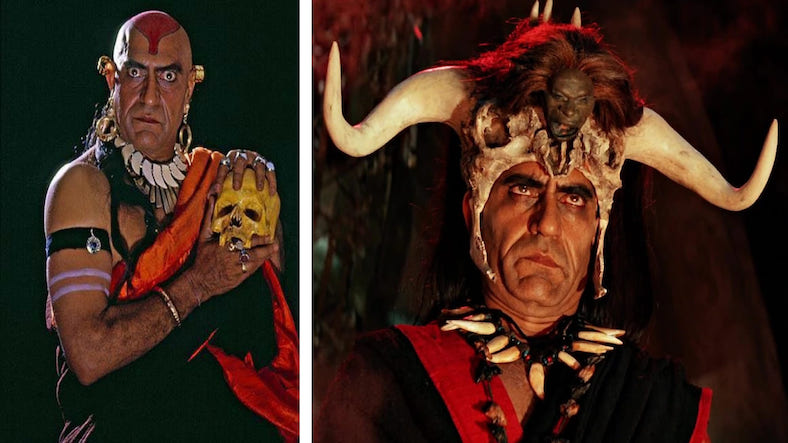
Amrish Puri (1932–2005) was a legendary Indian actor, revered for his commanding presence, versatile performances, and memorable portrayals of villains and character roles in Hindi and other Indian language films. Over a career spanning more than four decades, he became one of the most iconic actors in the history of Indian cinema, leaving behind a legacy that continues to inspire actors and filmmakers.
Early Life
Amrish Puri was born on June 22, 1932, in Lahore, which was then part of British India and is now in Pakistan. Following the partition of India in 1947, his family moved to Mumbai, where he eventually pursued his passion for acting.
Growing up in a time of social upheaval and political change, Puri was drawn to the arts and theatre from a young age. His early experiences in theater played a crucial role in shaping his acting style, particularly his powerful voice and commanding presence, which later became his signature in films.
Theatre Career and Foundations
Before making a mark in films, Amrish Puri was actively involved in theatre. He was associated with the Indian People’s Theatre Association (IPTA), which was known for its socially relevant plays and strong emphasis on performance craft.
During this period, Puri honed his skills in dialogue delivery, expressions, and body language. His theater background gave him a deep understanding of character development, enabling him to bring authenticity and gravitas to every role he played in films.
Film Debut
Amrish Puri made his screen debut in the Marathi film “Ghashiram Kotwal” (1972). Though the film had a limited release, it allowed Puri to showcase his acting abilities and led to further opportunities in Hindi cinema.
His early film roles were minor, but his dedication, discipline, and unique style gradually caught the attention of directors and producers. Puri’s commanding presence and deep, resonant voice became his hallmark, setting him apart from other actors of his generation.
Breakthrough Role
Amrish Puri’s career took a significant turn with the 1984 film “Mashaal”, directed by Yash Chopra. In this film, he played a powerful negative character that highlighted his ability to dominate the screen effortlessly.
Following “Mashaal”, Puri became a sought-after actor for villainous and supporting roles. He was recognized for his ability to combine menace, dignity, and complexity in his negative characters, earning him the reputation of being Bollywood’s quintessential villain.
Iconic Villainous Roles
Amrish Puri is best remembered for his portrayal of villains, characters who were larger than life yet deeply human. His deep voice, intense gaze, and impeccable dialogue delivery made him one of the most formidable antagonists in Indian cinema.
Some of his most iconic villainous roles include:
- Mogambo in “Mr. India” (1987) – The role of Mogambo became legendary, and his dialogue “Mogambo khush hua” is still quoted across generations.
- Bhujang in “Nagina” (1986) – A role that showcased his ability to combine menace with theatrical flair.
- Gulbadan in “Tridev” (1989) – A villain with depth and personality, adding layers to the story.
- Mola Ram in “Indiana Jones and the Temple of Doom” (1984) – His performance brought him international recognition, showing that his talent transcended Bollywood.
Notable Films
While Puri is primarily known for his villainous roles, he also excelled in character roles, including supporting and comedic roles. His ability to adapt to a wide variety of genres made him a versatile actor. Some of his notable films include:
- “Dilwale Dulhania Le Jayenge” (1995) – As the strict but loving father, he left a lasting impact on audiences.
- “Gadar: Ek Prem Katha” (2001) – Puri’s performance added emotional weight and gravitas to the story.
- “Mohra” (1994), “Karan Arjun” (1995), “Virasat” (1997) – Memorable performances that demonstrated his range across action, drama, and family-oriented cinema.
His work in international cinema, particularly “Indiana Jones and the Temple of Doom”, further highlighted his global appeal and ability to adapt to different filmmaking styles.
Google Ad 1
Versatility in Acting
Although Amrish Puri is celebrated as one of Bollywood’s greatest villains, his versatility extended far beyond negative roles. He was equally effective in:
- Positive roles – As mentors, father figures, or guiding authorities.
- Comedic roles – Puri occasionally brought humor to his performances, showing a lighter side.
- Mythological and historical characters – He portrayed kings, sages, and historical figures with authenticity and dignity.
His ability to seamlessly switch between genres and roles made him a respected figure among peers and audiences alike.
Awards and Recognition
Amrish Puri received widespread acclaim for his contribution to Indian cinema. Among his accolades:
- Filmfare Awards – He won multiple awards for Best Supporting Actor, recognizing his powerful performances.
- National and State Recognition – His work continues to be studied as a benchmark for villainous roles in Indian cinema.
- International Recognition – His role in Hollywood’s “Indiana Jones and the Temple of Doom” showcased his global acting caliber.
Puri’s career is a testament to hard work, discipline, and dedication to the craft of acting.
Personal Life
Amrish Puri was married to Urmila Divekar, and together they had two children: Rajiv Puri and Namrata Puri. Despite his larger-than-life presence on screen, he led a disciplined and grounded personal life.
He was known for mentoring younger actors, offering guidance and support to aspiring talent, and maintaining professionalism in all aspects of his work.
Death and Legacy
Amrish Puri passed away on January 12, 2005, due to a cerebral hemorrhage. His death was a significant loss for Indian cinema.
However, his legacy lives on through:
- Unforgettable performances – His characters continue to be celebrated for their intensity and depth.
- Dialogues and expressions – Lines like “Mogambo khush hua” are etched into Bollywood history.
- Influence on actors – Many actors cite Amrish Puri as a source of inspiration for their craft.
- Cultural impact – He helped shape the concept of the cinematic villain and elevated character acting in Indian films.
Amrish Puri’s contributions to cinema were not just about acting; they reflected a deep understanding of storytelling, emotion, and human psychology.
Conclusion
Amrish Puri was more than an actor; he was an institution in himself. His commanding screen presence, versatility across genres, and ability to breathe life into every character made him a legend. From the terrifying Mogambo to memorable father figures, his performances resonated with audiences across generations.
Even today, Amrish Puri remains an iconic figure in Indian cinema, a benchmark for actors, and a beloved personality remembered for his discipline, talent, and unforgettable contributions to films.
Thanks for reading about this legendary personality on PeoplesBLOG. For more inspiring biographies of great people, explore our other articles on PeoplesBLOG.