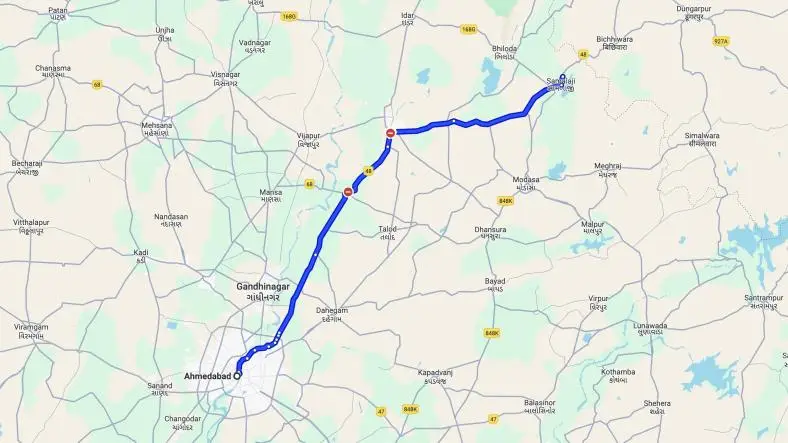
Shamlaji Temple, also known as Shamlaji Vishnu Mandir, stands as one of Gujarat’s most respected Vaishnavite pilgrimage sites. Positioned quietly along the Meshwo River and surrounded by the Aravalli Hills, this ancient temple attracts thousands of devotees throughout the year. Located around 120 km from Ahmedabad, it is an ideal one-day spiritual and cultural getaway.
Here’s a detailed article covers the best route, timings, where to stop on the way, and everything you need for a smooth and meaningful trip.
Ahmedabad to Shamlaji Temple Distance and Route
- Distance: 120 km
- Typical Travel Time: 2.5 to 3 hours
- Highway: NH48 (excellent road condition)
Recommended Route
Ahmedabad → Gandhinagar → Chiloda → Himmatnagar → Shamlaji
This route provides the fastest travel time and has several fuel stations, food options and rest points.
- Starting Point: Begin your journey in Ahmedabad, heading north via NH48.
- Route Highlights: The road is well-maintained and passes through lush green fields and small villages, providing a pleasant experience.
- Travel Modes:
- By Car: A self-drive or cab ride is the most convenient option, offering flexibility and comfort.
- By Bus: Gujarat State Transport and private buses frequently operate between Ahmedabad and Shamlaji.
- By Train: The nearest railway station is Shamlaji Road, located 4 km from the temple, which connects to Ahmedabad and other major cities.
Suggested One-Day Itinerary (Updated for 2025)
- 6:00 AM – Start from Ahmedabad
Begin early to avoid traffic and heat. - 8:30–9:00 AM – Reach Shamlaji Temple
Visit the main shrine, explore the intricate stone carvings, and spend some peaceful time at the riverbank. - 11:00 AM – Explore Surroundings
Walk around the temple complex and the smaller shrines. - 12:30 PM – Lunch
Local dhabas serve simple Gujarati meals. Many visitors also prefer carrying home-cooked food. - 2:00 PM – Visit Nearby Attractions
Devni Mori Buddhist Stupa
Meshwo Dam
Khedbrahma Temple
Modasa town markets - 4:00 PM – Relax at Meshwo River
A calm spot for photos and quiet time before heading back. - 5:00 PM – Drive back to Ahmedabad
- 7:30–8:00 PM – Reach Ahmedabad
This itinerary provides ample time for temple visits, exploration, and relaxation while ensuring a smooth journey.
Shamlaji Temple Timings (2025)
| Session | Timings |
|---|---|
| Morning Darshan | 6:30 AM – 12:30 PM |
| Afternoon Break | 12:30 PM – 3:00 PM |
| Evening Darshan | 3:00 PM – 8:30 PM |
| Aarti | 7:00 AM and 7:00 PM |
Note: Timings may extend on festival days.
What to Expect at Shamlaji Temple
Shamlaji Temple is an architectural and spiritual marvel that reflects centuries of devotion. Here’s what you can expect on your visit:
- Architectural Beauty: The temple’s intricate carvings, towering spires, and stunning sculptures are a testament to Gujarat’s rich heritage.
- Divine Atmosphere: The temple is dedicated to Lord Vishnu, worshiped here in the form of Gadadhar, meaning the bearer of the mace. The serene chants and prayers add to the divine aura.
- Pilgrimage Vibes: Devotees from across the country visit the temple, especially during the Kartik Purnima Festival, making it a vibrant and spiritual experience.
- Scenic Surroundings: Located by the Meshwo River and surrounded by the Aravalli Hills, the temple offers a tranquil setting for reflection and prayer.
Google Ad 1
On the Way: Places to Visit
The journey from Ahmedabad to Shamlaji offers several interesting stops that you can explore:
- Indroda Nature Park: Located near Gandhinagar, this park is perfect for nature lovers and houses a dinosaur museum and fossil exhibits.
- Modasa: A small town en route, known for its cultural heritage and local markets.
- Meshwo Dam: Stop by this scenic dam near Shamlaji to enjoy the calm waters and picturesque views.
- Devni Mori: A site of historical significance with a Buddhist stupa and monastery remains located near Shamlaji.
- Khedbrahma Temple: Another ancient temple dedicated to Lord Shiva, located a short distance from Shamlaji.
Best Time to Visit
The best time to visit Shamlaji Temple is during the winter months (October to March) when the weather is pleasant, making outdoor exploration comfortable.
- Summer (April to June): Avoid visiting during summer as the temperatures can rise above 40°C, making the journey and temple exploration challenging.
- Monsoon (July to September): The rains bring greenery to the region, making it a scenic time to visit, though travel may be affected by heavy showers.
- Special Occasion: The Kartik Purnima Festival (usually in November) is the most auspicious time to visit the temple, as it is celebrated with great enthusiasm and attracts a large number of devotees.
Travel Tips for a Smooth Trip
- Start Early: Leaving early from Ahmedabad ensures you have enough time to explore the temple and nearby attractions without rushing.
- Carry Essentials: Bring water, snacks, and comfortable clothing suitable for walking around the temple and exploring nearby areas.
- Respect Temple Customs: Follow the temple’s guidelines and dress modestly as a sign of respect for the religious significance of the place.
- Photography: While the temple’s architecture is stunning, check with the temple authorities regarding photography rules inside the premises.
- Cash Essentials: Carry some cash for offerings, food, and small purchases, as digital payments may not be widely accepted in the area.
- Local Food: Try the authentic Gujarati thali at a local dhaba for a wholesome meal during your trip.
Frequently Asked Questions (FAQ)
1. How many hours should I spend at the temple?
1.5 to 2 hours is enough to cover the main temple and riverbank.
2. Is the route safe for family travel?
Yes, NH48 is safe, well-maintained and busy throughout the day.
3. Are there good stay options near Shamlaji?
Accommodation is basic. For better hotels, Himmatnagar (35 km away) is recommended.
4. Is it suitable for senior citizens?
Yes. The temple complex is mostly flat and accessible.
5. Is parking available?
Adequate parking space is available near the temple.
If this trip inspired you, you might also like our articles on Tirupati, Dharmasthala, Srisailam, and several other travel routes we’ve covered in detail.