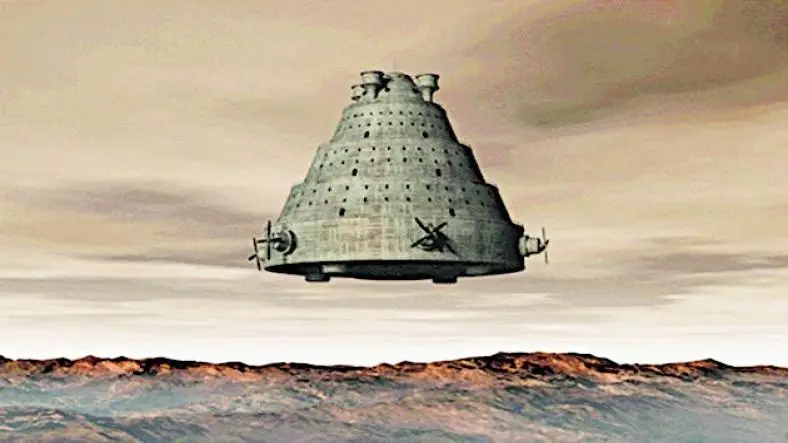
The concept of Vimanas—mysterious flying machines or aerial chariots described in ancient Indian texts—has intrigued scholars, historians, linguists, and enthusiasts for decades. While popular culture often associates Vimanas with advanced ancient technology or extraterrestrial origins, academic perspectives emphasize literary symbolism, mythology, and cultural context.
What Are Vimanas?
The Sanskrit term “Vimana” originally referred to a palace, throne, or carriage of the gods. Over time, especially in later literature, the meaning evolved to include celestial vehicles and aerial chariots described in epic and Puranic texts.
Across different periods of Indian literature, Vimanas appear in various forms:
- Royal chariots capable of flying
- Palaces that could move through the sky
- Celestial vehicles used by gods and sages
- Structured descriptions resembling mechanical crafts
This evolving definition makes Vimanas an interesting subject of linguistic, historical, and cultural study.
Vimanas in Ancient Indian Texts
1. Vimanas in the Ramayana
One of the most referenced examples is the Pushpaka Vimana mentioned in Valmiki’s Ramayana.
Key descriptions include:
- A self-moving aerial chariot originally owned by Kubera
- Seized later by Ravana
- Used by Lord Rama to return to Ayodhya after the Lanka war
- Described as spacious, splendid, and capable of traveling long distances rapidly
Although described poetically, the Pushpaka Vimana stands out as one of the earliest literary depictions of an aerial vehicle in world literature.
2. Vimanas in the Mahabharata
In the Mahabharata, references to aerial chariots are more diverse and often connected to divine intervention during battles.
Descriptions in the Mahabharata include:
- Chariots that could soar into the sky
- Vehicles that moved “like the wind”
- Weapons that resembled fire, energy beams, and projectiles
- Cosmic battles involving gods traveling in celestial crafts
These descriptions are typically understood as mythological or symbolic, though their technological resemblance has led to modern reinterpretations.
3. The Vaimanika Shastra
The Vaimanika Shastra, attributed to Maharshi Bharadwaj, is often cited in discussions on ancient aviation. It describes:
- Types of Vimanas
- Aerodynamic concepts
- Construction materials
- Propulsion theories involving mercury and solar energy
However, several important scholarly points apply:
- The text is believed by many historians to have been written in the early 20th century, not ancient times.
- Experts in Sanskrit have raised questions about its linguistic style, suggesting it is not consistent with classical Sanskrit literature.
- Modern aeronautical engineers have evaluated the described machines and concluded that the presented designs are not aerodynamically feasible.
Consequently, while the Vaimanika Shastra is a fascinating document, it is not considered an authentic ancient technical manual.
Theories About Vimanas
1. The Ancient Technology Theory
Proponents of ancient advanced civilizations believe Vimanas may represent real flying machines that existed thousands of years ago.
They cite:
- Detailed descriptions resembling aircraft structures
- References to propulsion, control mechanisms, and weapons
- Ideas like mercury-vortex engines, similar to early ion propulsion concepts
- The possibility of a forgotten civilization predating recorded history
Supporters argue that ancient India might have possessed advanced scientific knowledge later lost due to natural disasters, invasions, or cultural decline.
However, no archaeological evidence currently supports the existence of physical Vimanas or related technology.
2. Symbolic or Mythological Interpretation (Mainstream View)
The dominant academic perspective is that Vimanas are literary and symbolic, not technological.
Reasons include:
- Epic texts often use metaphors, poetic exaggerations, and divine imagery
- Similar celestial chariots exist in Greek, Roman, Egyptian, and Mesopotamian mythology
- No material evidence or technological artifacts have been found
- Many descriptions are metaphorical, representing divine power rather than mechanical engineering
According to scholars, Vimanas play a narrative role—symbolizing divine intervention, cosmic travel, or spiritual elevation.
3. Extraterrestrial Interpretation
This is a fringe theory but widely discussed in pop culture.
Advocates suggest:
- Vimanas were spacecraft used by extraterrestrial visitors
- High-energy weapons described in epics resemble advanced technology
- Similar myths in other cultures point to a shared global memory of alien encounters
Academic consensus does not support this theory, as it lacks empirical evidence, but it remains popular in speculative literature.
Google Ad 1
Could Vimanas Have Been Real?
While no concrete physical evidence exists, the persistence of detailed descriptions raises several intriguing possibilities.
1. Ancient Knowledge and Imagination
Ancient Indian scholars had remarkable scientific awareness—mathematics, metallurgy, astronomy, architecture—so conceptualizing flying chariots may reflect imaginative exploration rather than literal machines.
2. Early Scientific Thought
Some descriptions may reflect:
- Observation of natural phenomena (meteors, comets)
- Symbolic representations of celestial movement
- Philosophical ideas of travel across the three worlds (loka-traya)
3. Lost Cultural Narratives
India has a long oral tradition. Many ancient texts are lost or fragmented. Whether symbolic or literal, Vimanas might belong to a broader cultural story that evolved over time.
Scientific and Archaeological Evidence
From a strictly empirical standpoint:
- No artifacts, tools, engines, or charred remains resembling aircraft have been found.
- Aerodynamics principles described in later texts are inconsistent with real physics.
- Archaeological excavations across sites like Harappa, Dholavira, and ancient Vedic regions show no technological evidence supporting flight mechanisms.
Thus, Vimanas remain literary constructs, not historical machines.
FAQs
1. Were Vimanas real flying machines?
There is no archaeological or scientific evidence proving Vimanas were real mechanical aircraft. Most scholars interpret them as mythological or symbolic descriptions found in ancient literature.
2. Which ancient texts mention Vimanas?
Vimanas are mentioned in texts such as the Ramayana, Mahabharata, and later references appear in the Puranas. The Pushpaka Vimana is the most well-known example.
3. Is the Vaimanika Shastra an ancient aerospace manual?
Most historians believe the Vaimanika Shastra was composed in the early 20th century. Linguistic analysis suggests it is not an authentic ancient Sanskrit text.
4. Do Vimanas relate to extraterrestrials?
This theory exists in popular media but lacks empirical evidence. Academic research does not support extraterrestrial interpretations.
5. Why are Vimanas described so vividly?
Ancient Indian literature uses rich imagery, metaphor, and divine symbolism. The vivid descriptions of flying chariots enhance narrative drama rather than depict real machines.
Conclusion
The idea of Vimanas continues to captivate the world, blending mythology, culture, imagination, and speculation. While popular theories propose advanced ancient technology or extraterrestrial involvement, mainstream academic understanding views Vimanas as symbolic or mythological elements in ancient Indian literature.
The absence of physical evidence suggests that Vimanas were not real flying machines, yet their presence in literature offers valuable insight into ancient India’s imagination, storytelling, and spiritual worldview. Whether interpreted as myths or metaphors, Vimanas remain an enduring and fascinating part of India’s cultural heritage.
Thanks for reading the article, for more unsolved mysteries related articles read our peoples blog articles.
![OnePlus Buds Pro 3 Bluetooth TWS in-Ear Buds - Dual Drivers, Dual DACs, Dynaudio EQs, Up to 50dB Adaptive Noise Cancellation, Up to 43Hrs Battery [Lunar Radiance]](https://m.media-amazon.com/images/I/61dVOVxHn3L._SX679_.jpg "OnePlus Buds Pro 3 Bluetooth TWS in-Ear Buds - Dual Drivers, Dual DACs, Dynaudio EQs, Up to 50dB Adaptive Noise Cancellation, Up to 43Hrs Battery [Lunar Radiance]")