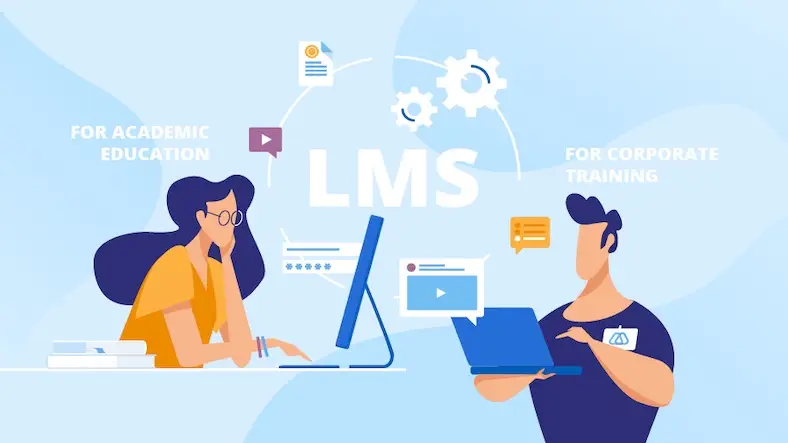
If you run an education business today—whether it’s an online academy, coaching platform, corporate training portal or skill-development institute—choosing the right Learning Management System (LMS) is one of the most important decisions you will make. Your LMS becomes the backbone of your teaching, course delivery, student engagement and business growth.
Among the many LMS platforms available, Drupal stands out as a flexible, secure and highly customizable solution capable of powering simple online courses to large-scale e-learning ecosystems.
What Makes Drupal a Great LMS Platform?
Drupal is well-known for its content management strength, security, scalability and modular ecosystem. These qualities make it ideal for building powerful LMS solutions tailored to your exact needs.
Unlike pre-built LMS platforms with fixed structures, Drupal allows you to create custom workflows, content formats and integrations—making it especially valuable for institutions wanting full control over their system.
Essential Drupal LMS Features Every Education Business Should Consider
1. Comprehensive Course Management
Strong course management is the foundation of any effective LMS.
A Drupal-powered LMS should allow you to:
- Create unlimited courses
- Organize lessons, topics, and learning paths
- Add reading material, videos, quizzes and downloadable resources
- Schedule assignments
- Manage batch timings and modules
- Track enrollment and progress
Drupal’s flexible content types and taxonomy make structuring courses extremely efficient.
2. Powerful User Management and Permissions
User management becomes crucial when dealing with multiple roles such as:
- Students
- Teachers
- Parents
- Admins
- Evaluators
- Organization heads
Drupal’s robust user system allows you to:
- Manage roles and permissions
- Create detailed user profiles
- Segment users into groups or cohorts
- Track individual learner performance
- Enable instructor–student communication
This makes it easy to create a personalized learning environment for each student.
3. Rich Content Creation and Delivery Tools
One of Drupal’s strongest advantages is its advanced content management capabilities.
Your Drupal LMS should support:
- WYSIWYG editor for easy content creation
- Multimedia lessons (audio, video, images, PDFs)
- Interactive learning materials
- Presentation-style modules
- Content versioning
- Reusable content components
- SCORM/XAPI compatibility through integrations
This flexibility allows you to create engaging learning experiences instead of plain text lessons.
4. Advanced Assessment and Grading Systems
Evaluating learners effectively is essential for any education business.
A Drupal LMS can include:
- Multiple quiz formats (MCQ, true/false, descriptive, timed tests)
- Automated grading for objective questions
- Custom grading scales and rubrics
- Assignment upload features
- Instructor review tools
- Instant feedback options
- Certificate generation after course completion
This empowers both instructors and learners with clarity and structure.
5. Progress Tracking, Monitoring and Reporting
Data-driven insights help educational institutes improve learning outcomes.
Key reporting features to look for include:
- Learner activity logs
- Assessment reports
- Course completion statistics
- Quiz performance analytics
- Attendance tracking (optional)
- Engagement metrics
- Custom downloadable reports
These insights help administrators identify weak areas and improve content or teaching methods.
6. Collaboration and Communication Tools
Learning is most effective when communication is smooth.
A Drupal LMS can include:
- Discussion forums
- Comment threads
- Private messaging
- Group chats
- Live class links
- Announcement systems
These features help build an interactive learning community inside your platform.
Google Ad 1
7. Gamification Features for Higher Engagement
Gamification boosts motivation, especially for young learners and long-term courses.
Drupal LMS solutions can include:
- Badges and achievements
- Points system
- Leaderboards
- Progress bars
- Rewards for milestones
When implemented well, gamification significantly improves course completion rates.
8. Mobile-Responsive Learning Experience
More than half of learners today access educational content through mobile devices.
A Drupal LMS must offer:
- Fully mobile-responsive design
- Fast-loading pages
- Touch-friendly interfaces
- Mobile-accessible quizzes and lessons
This ensures seamless learning from anywhere and on any device.
9. Integration Flexibility and Custom Development
Drupal’s modular design lets you integrate your LMS with:
- Student Information Systems (SIS)
- CRMs
- Video conferencing platforms (Zoom, Google Meet, Jitsi)
- Payment gateways
- Email automation tools
- E-commerce modules
- Webinar systems
- Marketing tools
This allows you to build a complete educational ecosystem rather than a stand-alone LMS.
10. Security and Data Protection
Educational institutions handle sensitive information such as:
- Student personal data
- Exam results
- Payment records
- Communication logs
Drupal is known for its enterprise-grade security. A Drupal LMS can offer:
- Strong user authentication
- Role-based access control
- Encrypted data storage
- Regular security updates
- Audit logs
- Compliance with data protection standards
This ensures your platform remains safe for both learners and administrators.
FAQs
1. Is Drupal a good platform for building an LMS?
Yes. Drupal is one of the most secure and flexible platforms for developing custom LMS systems. It supports powerful content creation, integrations, strong security, and complete customization.
2. Can a Drupal LMS support video lessons and multimedia content?
Absolutely. Drupal supports videos, images, PDFs, presentations and even interactive content. You can integrate video conferencing or host recorded lessons directly.
3. Does Drupal offer built-in LMS features?
Drupal does not come with a built-in LMS, but its module ecosystem allows you to assemble a fully functional LMS tailored to your needs.
4. Can I scale a Drupal LMS for thousands of students?
Yes. Drupal is highly scalable, making it suitable for institutions that expect a large and growing user base.
5. How much customization is possible in a Drupal LMS?
Almost unlimited. You can customize course flows, user roles, designs, dashboards, payment systems, integrations, grading systems and more.
Conclusion
A Drupal-based Learning Management System provides unmatched flexibility, security and scalability for modern education businesses. Whether you operate an online coaching platform, corporate training portal or full-scale academic institution, a Drupal LMS can be tailored to meet your exact needs.
With features like powerful course management, user roles, multimedia content delivery, assessments, progress tracking, communication tools, gamification, mobile responsiveness and third-party integrations, Drupal enables you to create a professional and future-ready e-learning platform.
By choosing the right modules and customizing workflows, you can build an LMS that not only supports your teaching goals but elevates the entire learning experience for your students.
Thank you for reading this Drupal-focused article on PeoplesBLOG. For more insights on Drupal development, LMS solutions and education technology, continue exploring our latest posts.







![Samsung Galaxy Tab S9 FE [Smartchoice], RAM 6 GB, ROM 128 GB Expandable, S Pen in-Box, Wi-Fi, IP68 Tablet, Gray](https://m.media-amazon.com/images/I/71BM3TBipEL._SX679_.jpg "Samsung Galaxy Tab S9 FE [Smartchoice], RAM 6 GB, ROM 128 GB Expandable, S Pen in-Box, Wi-Fi, IP68 Tablet, Gray")