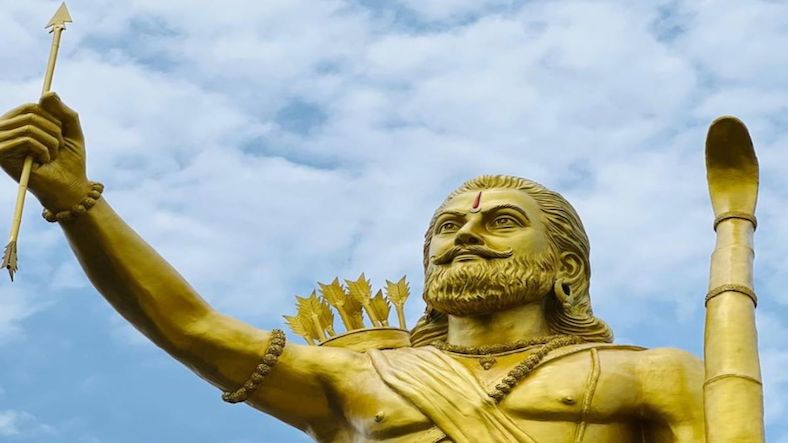
Alluri Sitarama Raju remains one of the most iconic figures in India’s struggle for freedom. Known for his leadership in the Rampa Rebellion (1922–1924), he emerged as a fearless revolutionary who inspired thousands of tribal families to rebel against British injustice. His movement represented both a tribal rights revolt and a broader armed resistance against colonial rule.
Between his courageous guerrilla warfare tactics, deep rapport with indigenous tribal communities, and ultimate martyrdom, Alluri Sitarama Raju has earned the title “Manyam Veerudu”, meaning “Hero of the Jungle.”
Early Life and Background
1. Birthplace: Multiple Historical Accounts
The birthplace of Alluri Sitarama Raju has been a subject of debate, and your request to “double-check” facts matches modern findings. Historical sources offer three major possibilities:
- Bhimavaram – Some official colonial-era administrative records claim he was born here.
- Mogallu, West Godavari District – This is widely cited in textbooks and biographies and has traditionally been accepted for decades.
- Pandrangi, near Bheemunipatnam, Visakhapatnam District – Recent studies, including local records and family histories, suggest this may be his precise place of birth.
All three references exist in serious scholarship. Therefore, the most accurate statement today is:
“Historical sources differ on Alluri Sitarama Raju’s birthplace. Older records mention Bhimavaram and Mogallu, while newer research strongly supports Pandrangi village as the correct place of birth.”
2. Date of Birth
Alluri Sitarama Raju was born on 4 July 1897.
3. Family and Cultural Influence
He was born into a traditional Telugu family with deep roots in rural Andhra society. Although not wealthy, his family was respected locally. From a young age, he was exposed to:
- Spiritual teachings
- Folk traditions
- Tribal culture
- Freedom movement undercurrents
These influences shaped his personality, making him disciplined, fearless, and deeply empathetic toward oppressed communities.
Education and Spiritual Growth
Alluri Sitarama Raju did not pursue formal education for long. Instead, he developed an intense interest in:
- Yoga
- Meditation
- Ayurveda
- Astrology
- Scriptures
Local accounts describe him as a charismatic, calm, and disciplined young man who displayed early leadership qualities. His spiritual leaning strengthened his mental resilience, which later played a crucial role in his revolutionary work.
Rise of a Revolutionary Leader
By the early 1920s, British colonial policies were deeply affecting tribal communities in the Godavari Agency region. These included:
- Strict forest laws
- Forced labor
- Restrictions on traditional farming and hunting
- Exploitative revenue practices
- Police brutality
Tribal communities such as the Konda Doras faced continuous harassment. Sitarama Raju saw their suffering firsthand.
His growing empathy toward tribal families, combined with discontent toward oppressive British laws, transformed him into a revolutionary leader determined to end injustice.
The Rampa Rebellion (1922–1924)
The Rampa Rebellion, also known as the Alluri Rebellion, began in August 1922 in the forested hills of the Eastern Ghats. It remains one of the most important tribal uprisings in India’s freedom struggle.
Causes of the Revolt
The rebellion was triggered mainly due to:
- Harsh forest regulations
- Restrictions on shifting cultivation
- Exploitation by contractors and police
- Loss of land and livelihood
- Suppression of tribal traditional rights
These policies destroyed the economic and cultural life of the tribal population. Raju became their voice.
Guerrilla Warfare and Strategy
Alluri Sitarama Raju is remembered for pioneering effective guerrilla warfare against British forces. His tactics included:
- Perfect knowledge of hill terrain
- Surprise attacks on police stations
- Snatching arms from British outposts
- Quick retreat into dense forest
- Mobilizing large groups of tribal youth
- Dispersed formations to avoid capture
Between 1922 and 1923, his forces successfully attacked and overpowered multiple British police stations across the region, including:
- Chintapalli
- Krishnadevipeta
- Rampachodavaram
- Annavaram
These actions shocked the British administration and lifted the morale of tribal communities.
Google Ad 1
Commitment to Tribal Rights
Alluri Sitarama Raju was not fighting for political power or personal ambition. His mission was clear:
- Protect Adivasi lands
- End British exploitation
- Restore tribal dignity
- Safeguard forests and livelihood
He educated tribal communities about:
- Their rights
- The need for unity
- Collective resistance
- Importance of self-respect
His ability to communicate and build trust made him a revered figure across the Eastern Ghats.
British Crackdown and Capture
By 1923, British authorities launched a large-scale military campaign to capture him. They brought in:
- Additional troops
- Special police battalions
- New weaponry
Despite being outnumbered, Raju continued to evade capture for nearly two years.
Martyrdom (1924)
On 7 May 1924, Alluri Sitarama Raju was eventually captured near Koyyuru after a strategic betrayal. He was executed without trial by British forces.
His final sacrifice turned him into a national hero and symbol of resistance.
Legacy of Alluri Sitarama Raju
Alluri Sitarama Raju’s impact is long-lasting and profound. His legacy includes:
1. Symbol of Tribal Resistance
He championed the rights of marginalized tribal communities far before such movements became mainstream.
2. Inspiration for Freedom Fighters
His courage inspired countless young Indians to challenge British rule.
3. Cultural Icon of Andhra Pradesh
Statues, memorials, documentaries, and films continue to honor him across the state.
4. National Recognition
The Government of India commemorates him through:
- Postal stamps
- Memorials
- Academic studies
- Tribal welfare programs in his name
He is widely remembered as Manyam Veerudu — The Hero of the Forests.
Conclusion
Alluri Sitarama Raju (1897–1924) stands tall in India's history as one of its most courageous and selfless revolutionaries. His leadership of the Rampa Rebellion, unwavering dedication to tribal rights, mastery of guerrilla warfare, and ultimate martyrdom created an unshakeable legacy.
He fought not just against British rule, but for dignity, justice, and the cultural preservation of indigenous communities.
Today, his life continues to inspire activists, scholars, youth, and tribal rights defenders across India.
Thank you for reading about this legendary freedom fighter on PeoplesBLOG. For more inspiring biographies of great personalities, continue exploring our historical and cultural articles.