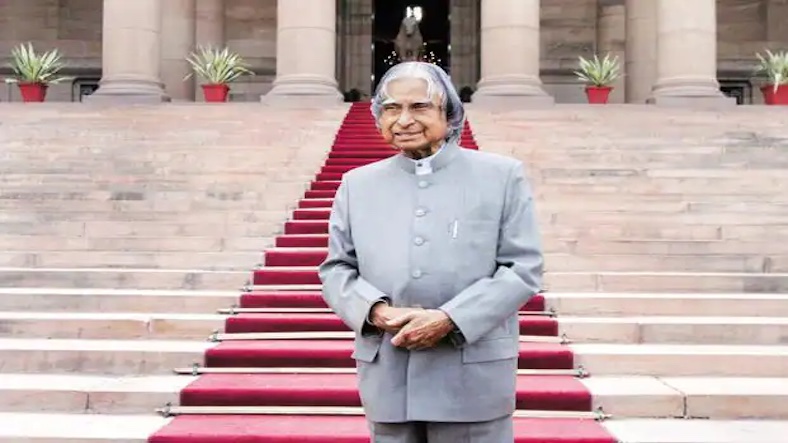
APJ Abdul Kalam (1931–2015), full name Avul Pakir Jainulabdeen Abdul Kalam, was one of India’s most respected scientists, leaders, and visionaries. He served as the 11th President of India (2002–2007) and became widely known as the People’s President. His contributions to science, technology, national development, education, and youth empowerment made him one of the most influential figures in modern Indian history.
This article explores his early life, achievements, scientific contributions, presidency, personality, and lasting legacy.
Early Life and Family Background
Birth: October 15, 1931
Place: Rameswaram, Tamil Nadu, India
APJ Abdul Kalam was born into a humble family on the island town of Rameswaram. His father, Jainulabdeen, was a boat owner and imam at a local mosque. His mother, Ashiamma, was a homemaker known for her kindness and generosity. Although the family was not financially wealthy, they were rich in values, discipline, and spirituality.
1. Childhood and Education
Kalam grew up in a simple environment. As a child, he helped his family by distributing newspapers. This early exposure to hard work shaped his disciplined lifestyle and strong work ethic.
Key aspects of his early education:
- He studied at Schwarz Higher Secondary School in Rameswaram.
- He had a deep interest in mathematics and science.
- His teachers encouraged him to dream big and pursue higher studies.
After completing his schooling, Kalam moved to Tiruchirapalli, where he studied physics at St. Joseph’s College. Later, he joined the Madras Institute of Technology (MIT) to study aeronautical engineering. His time at MIT marked the beginning of his journey into India's space and defense programs.
Scientific Career and Achievements
APJ Abdul Kalam dedicated over four decades of his life to India's defense and space research. He worked with some of the country’s most important scientific institutions, including:
- Defence Research and Development Organisation (DRDO)
- Indian Space Research Organisation (ISRO)
1. Role in India’s Space Programme
Kalam played a crucial role in the development of SLV-III, India’s first indigenous satellite launch vehicle. This project successfully launched the Rohini satellite into space in 1980, making India a space-capable nation.
His contributions included:
- Leadership in rocket engineering
- Development of advanced satellite systems
- Designing key space technologies for national security
2. The Missile Man of India
Kalam earned the title “Missile Man of India” for his leading role in creating India’s ballistic missile systems. Some of the important missile projects he contributed to include:
- Agni series
- Prithvi series
- Integrated Guided Missile Development Programme (IGMDP)
These projects strengthened India's defense capabilities and established Kalam as one of the world’s leading defense technologists.
3. Pokhran-II Nuclear Tests (1998)
Kalam was a key figure in the Pokhran-II nuclear tests conducted in 1998. These tests demonstrated India’s nuclear strength and placed the nation among the world’s advanced nuclear powers. His leadership and technical guidance were crucial to the mission’s success.
Visionary Leadership and National Development
Beyond science, APJ Abdul Kalam was a visionary leader who believed that technology, education, and national unity could transform India. His ideas focused on:
- Reducing poverty
- Strengthening rural development
- Promoting scientific thinking
- Encouraging innovation
- Ensuring sustainable growth
1. India 2020 Vision
One of Kalam’s most influential ideas was “Vision 2020”, a plan to transform India into a developed nation. It highlighted:
- Economic growth
- Technological advancement
- Good governance
- Quality education
- Social equality
His book “India 2020: A Vision for the New Millennium” remains one of the most widely read development-focused books in India.
Commitment to Education and Youth Empowerment
APJ Abdul Kalam strongly believed that education is the most powerful tool to change the future of a nation. He interacted directly with students throughout his life, even after becoming the President.
1. His Educational Ideals
Kalam encouraged young people to:
- Read more
- Ask questions
- Stay curious
- Set goals
- Work hard
- Contribute to society
He often said, “Dream, dream, dream. Dreams transform into thoughts and thoughts result in action.”
Kalam delivered thousands of lectures in schools, colleges, and universities. He spent time with students even on his foreign visits. For him, inspiring the youth was not a responsibility but a personal mission.
Presidency: The People’s President
APJ Abdul Kalam served as the 11th President of India from 2002 to 2007. His presidency brought a new level of respect and admiration for the office.
1. Why He Was Called the People's President
Unlike many political leaders, Kalam was approachable, humble, and deeply connected to ordinary people. He welcomed school children, interacted with farmers, met scientists, and encouraged teachers. His presidency focused on:
- National unity
- Inclusive growth
- Honesty and transparency
- Modernization of governance
- Public participation in development
He used his position not for power but to inspire the nation.
Google Ad 1
Personality and Values
Kalam was admired for his simplicity and humility. Despite his global fame, he lived a modest life. Some qualities that defined him were:
- Discipline
- Hard work
- Patience
- Kindness
- Integrity
- Optimism
- Respect for all religions
He believed in spiritual values and often mentioned the influence of the Bhagavad Gita, Quran, and Bible in shaping his thinking.
1. Inspirational Writing
Kalam authored several books, including:
- Wings of Fire
- Ignited Minds
- My Journey
- The Life Tree
- Mission India
These books continue to inspire millions to pursue excellence.
Awards and Recognition
During his lifetime, Abdul Kalam received many honors:
- Bharat Ratna (1997), India’s highest civilian award
- Padma Bhushan (1981)
- Padma Vibhushan (1990)
- Honorary doctorates from over 40 universities worldwide
These awards recognized his achievements in science, leadership, and education.
Final Years and Passing
Even after his presidency, Kalam continued teaching, writing, and interacting with students. On July 27, 2015, while delivering a lecture at the Indian Institute of Management (IIM) Shillong, he collapsed due to a cardiac arrest and passed away at the age of 83.
His final moments reflected his lifelong dedication to knowledge and youth.
Lasting Legacy
APJ Abdul Kalam’s legacy continues to guide India and inspire people around the world. He is remembered for:
- Advancing India’s space and missile programs
- His contributions to national security
- His dream of transforming India into a developed nation
- His lifelong dedication to education
- His uplifting speeches and books
- His ability to inspire millions of young people
Kalam’s birthday, October 15, is celebrated as World Students Day in recognition of his devotion to students.
Why He Remains Iconic
- He rose from a modest background to become President of India.
- He proved that discipline and hard work can change destiny.
- He showed that science can solve real-world problems.
- He encouraged young people to dream big.
- His life was an example of simplicity and service.
APJ Abdul Kalam will always be remembered as a scientist, teacher, leader, and a symbol of hope for future generations.
Summary
APJ Abdul Kalam was one of the most inspiring figures in India’s history. From pioneering missile and space technology to becoming the People’s President, he dedicated his life to national development and youth empowerment. His books, speeches, vision, and values continue to guide millions. Kalam’s life story is a reminder that dreams, when combined with dedication and hard work, can transform not only individual lives but entire nations.
Thank you for reading this article. For more inspiring biographies and life stories, explore PeoplesBLOG.
![OnePlus Pad 2(12.1 Inch)LCD Display,12GB RAM, 256GB Storage,Snapdragon 8 Gen 3,144Hz Refresh Rate,Dolby Vision & Atmos,Open Canvas,AI features,6 speakers,Wi-Fi with Cellular Data Sharing [Nimbus Gray]](https://m.media-amazon.com/images/I/61tslaYWLjL._SX679_.jpg "OnePlus Pad 2(12.1 Inch)LCD Display,12GB RAM, 256GB Storage,Snapdragon 8 Gen 3,144Hz Refresh Rate,Dolby Vision & Atmos,Open Canvas,AI features,6 speakers,Wi-Fi with Cellular Data Sharing [Nimbus Gray]")