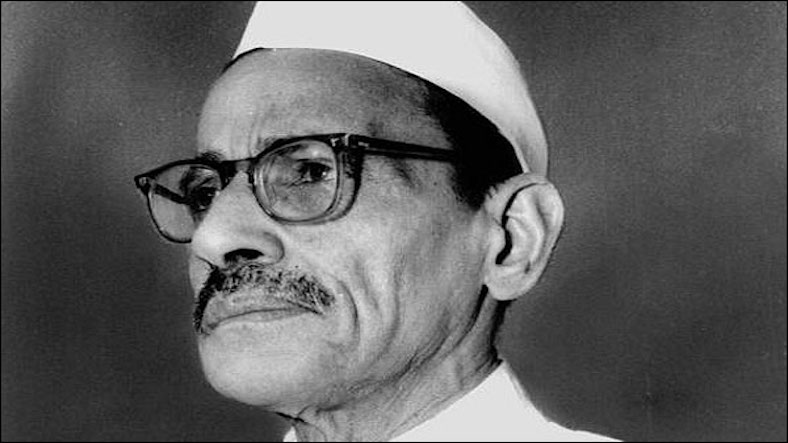
Gulzarilal Nanda was one of India’s most respected political leaders, best remembered for serving twice as the Acting Prime Minister of India after the deaths of Jawaharlal Nehru (1964) and Lal Bahadur Shastri (1966). A dedicated freedom fighter, economist, and social reformer, Nanda spent his entire life working for labor rights, planning reforms, and the upliftment of India’s working class.
Despite holding the highest office in the country twice, Nanda lived a simple, modest life and is celebrated today as the symbol of honesty in Indian politics.
Who Was Gulzarilal Nanda?
Gulzarilal Nanda (1898–1998) was an Indian politician, economist, and social reformer who dedicated more than seven decades to public service. He was a member of the Indian National Congress, a key contributor to labor policies, and one of India’s earliest planners.
He played a crucial role in:
- Labor welfare reforms
- Industrial policy development
- Planning Commission activities
- Strengthening India’s socio-economic framework
His biggest leadership moments came during political transition periods, where he served as the interim Prime Minister twice, ensuring stability and calm in the country.
Early Life and Education
Gulzarilal Nanda was born on July 4, 1898, in Sialkot (now in Pakistan). He pursued his education at:
- Allahabad University
- Lahore University
During his student years, he developed a strong interest in economics, sociology, and national independence, leading him toward India’s freedom struggle.
Role in the Indian Freedom Movement
Like many great leaders of his generation, Nanda actively participated in:
- Non-Cooperation Movement
- Civil Disobedience Movement
- Quit India Movement
He was imprisoned multiple times for his involvement.
Through his activism, he gained deep insights into social issues, especially poverty, labor exploitation, and economic inequality.
Work in Labor Reforms
Nanda had a lifelong passion for labor welfare. He played major roles in:
- Organizing textile labor movements
- Advocating for fair wages
- Developing dispute resolution systems
He served as:
- Labour Minister of Bombay (1947–1950)
- Chairman of various labor committees
- Member of the International Labour Organization (ILO)
His efforts laid the foundation for India’s labor laws, industrial peace mechanisms, and worker protection programs.
Political Career After Independence
1. Ministerial Roles
After 1947, Nanda handled some of the most important portfolios:
- Minister of Labour and Employment
- Minister of Planning
- Minister of Home Affairs (1963–1966)
He was known for his balanced decisions, clean conduct, and deep understanding of India’s socio-economic challenges.
Gulzarilal Nanda as Acting Prime Minister of India
First Term – 1964
After the death of Jawaharlal Nehru on May 27, 1964, Nanda, as Home Minister, was appointed the Acting Prime Minister.
He held office from May 27 to June 9, 1964, until Lal Bahadur Shastri was elected.
Second Term – 1966
On January 11, 1966, after the sudden death of Prime Minister Lal Bahadur Shastri in Tashkent, Nanda again stepped in as Acting PM.
He served from January 11 to January 24, 1966, until Indira Gandhi assumed office.
Why Was Gulzarilal Nanda Trusted Twice?
He was selected both times because of:
- His clean reputation
- Seniority in cabinet
- Non-controversial nature
- Ability to maintain stability
- Constitutional clarity in transitions
Nanda himself never tried to hold on to power and peacefully handed over the office twice.
Google Ad 1
Policies and Contributions
1. Labor Welfare
Some major reforms influenced by Nanda include:
- Worker safety standards
- Minimum wage reforms
- Factory dispute resolution frameworks
- Worker housing and welfare measures
2. Planning and Economic Development
As a member of the Planning Commission, he contributed to:
- India’s Five-Year Plans
- Public sector development
- Balanced economic growth models
He believed in combining economic planning with social justice.
3. Home Ministry Achievements
As Home Minister, he worked on:
- Internal security
- Police reforms
- Border management
- Administrative restructuring
Awards and Honors
Gulzarilal Nanda received:
- Bharat Ratna (posthumously, 1997) – India’s highest civilian award
- Padma Vibhushan
- Multiple honors from labor organizations and cooperative bodies
His Bharat Ratna stands as a tribute to his lifelong honesty and dedication.
Personal Life & Simplicity
Nanda led a humble life:
- Lived in a small residence
- Refused privileges
- Had no major personal wealth
- Frequently donated money to public causes
Even after retiring, he survived mostly on his pension and remained deeply respected for his integrity.
Legacy
Gulzarilal Nanda remains a symbol of:
- Clean politics
- Dedicated public service
- Selflessness
- Administrative stability
His work forms the backbone of India’s labor rights framework and continues to influence economic planning.
FAQs About Gulzarilal Nanda
1. Who was Gulzarilal Nanda?
Gulzarilal Nanda was an Indian freedom fighter, economist, and politician who served twice as the Acting Prime Minister of India.
2. Why did Gulzarilal Nanda become Prime Minister twice?
He became interim PM after the deaths of Jawaharlal Nehru (1964) and Lal Bahadur Shastri (1966), as he was the senior-most cabinet member and known for stability.
3. What were Gulzarilal Nanda’s contributions?
His major contributions include labor reforms, economic planning, and ensuring smooth political transitions during national crises.
4. What awards did Gulzarilal Nanda receive?
He received the Bharat Ratna, Padma Vibhushan, and various labor and national honors.
5. What was Gulzarilal Nanda’s role in labor reforms?
He worked extensively on labor rights, fair wages, worker welfare, and industrial dispute resolution systems.
Conclusion
Gulzarilal Nanda’s life is a powerful example of integrity, dedication, and selfless public service. Though he served as India’s Prime Minister only in transition periods, his real legacy lies in his contributions to labor rights, economic planning, and honest governance. His century-long life stands as an inspiration for future generations of Indians.
Thanks for reading about this great personality on PeoplesBLOG. For more inspiring biographies, continue exploring our “Great People” section.