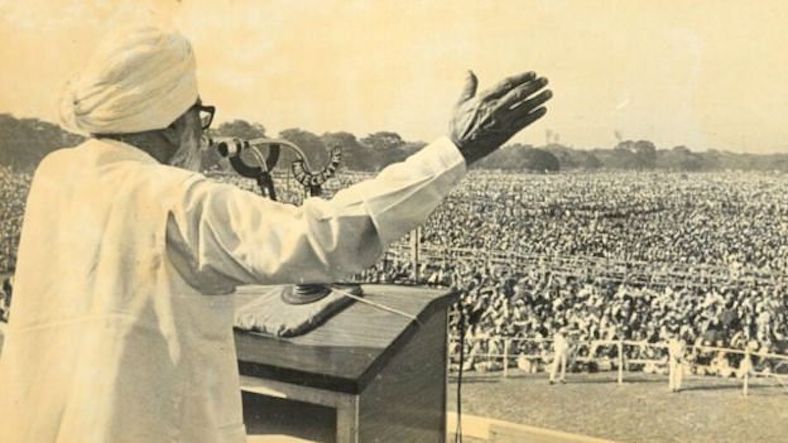
Harkishan Singh Surjeet (1916–2008) was one of the most influential communist leaders in India. Known for his sharp political mind, strong organizational skills and lifelong commitment to workers and farmers, Surjeet played an important role in shaping modern Indian politics. His work in building alliances, promoting secular values and strengthening the Communist Party of India (Marxist) made him a key figure in national politics for several decades.
This article explores his early life, political journey, major contributions, and lasting impact on India’s political landscape.
Early Life and Background
1. Birth and Family
Harkishan Singh Surjeet was born on March 23, 1916, in Ropar (now Rupnagar) in Punjab, during the period of British India. He grew up in a farming family and was exposed early to the struggles of rural life. These experiences shaped his political thinking and later inspired him to work for farmers and workers throughout his career.
2. Influence of the Freedom Movement
Surjeet came of age during India’s struggle for independence.
He was influenced by:
- The freedom movement
- Farmer struggles in Punjab
- Socialist and left-wing ideas
His interest in politics began early, and he soon became involved in anti-British activities, which eventually led him toward communist ideology.
Entry into Communist Politics
1. Adoption of Marxist-Leninist Ideology
As he grew more active in political work, Surjeet aligned himself with Marxism-Leninism. He believed that socialism was essential to uplift workers, peasants and marginalized communities.
He officially joined the Communist Party of India (CPI) in the 1930s, and later became part of the Communist Party of India (Marxist) or CPI(M) after the split in 1964.
2. Early Political Activities
Before independence, Surjeet was involved in:
- Anti-colonial struggles
- Peasant movements
- Left-wing organizing in Punjab
His activism often brought him into conflict with British authorities, and he faced arrests and imprisonment multiple times. However, these challenges only strengthened his resolve.
Rise in the Communist Party
1. Organizational Strength
Surjeet was known for his exceptional organizational abilities.
He played a key role in:
- Strengthening party units in Punjab
- Supporting farmers’ mobilizations
- Leading workers’ unions
- Building alliances with smaller political groups
His calm nature, strategic thinking and ability to negotiate helped him rise steadily within the CPI(M).
2. Key Roles in the Party
Over the years, Surjeet served in several important positions, including:
- Member of the Central Committee
- Member of the Politburo
- Party strategist during elections
- Senior leader responsible for national alliances
His role became even more important after the 1980s, as coalition politics grew in India.
General Secretary of CPI(M) (1992–2005)
The most important phase of Surjeet’s career came when he became the General Secretary of the CPI(M) in 1992, a position he held until 2005.
1. Leadership Style
Surjeet was remembered for:
- His negotiation skills
- His deep understanding of national politics
- His ability to communicate with leaders across different parties
- His commitment to democratic and secular principles
He was respected across the political spectrum, even by leaders who disagreed with his ideology.
2. Strengthening the Party
During his tenure as General Secretary, Surjeet worked to:
- Expand the party’s influence
- Strengthen organizational structures
- Build alliances with regional parties
- Improve representation of farmers and workers
- Promote secular and democratic values
His efforts helped the CPI(M) become one of the strongest Left parties in India during the 1990s and early 2000s.
Role in National Politics
1. Electoral Politics
Surjeet won his first election in 1952, when he was elected to the Punjab Legislative Assembly.
He later served multiple terms as a Member of Parliament (MP), representing Left policies in the national legislature.
2. United Front Government (1996)
One of Surjeet’s most important political achievements was his role in forming the United Front government in 1996.
The United Front was a coalition of non-Congress and non-BJP parties.
Surjeet worked behind the scenes to bring these parties together and maintain unity.
This phase highlighted his talent for coalition-building and his deep influence in national politics.
3. Role in Coalition Era
Throughout the 1990s and early 2000s, Surjeet became known as:
- A key bridge between political parties
- A strategist during government formation
- A strong voice for secularism
- A respected negotiator during political crises
Because of this, he was often called the “architect of coalition politics” in India.
Google Ad 1
Advocacy for Farmers and Workers
Surjeet’s roots in agriculture shaped his political philosophy.
He consistently fought for:
- Fair treatment for farmers
- Strengthening of agricultural policies
- Rights of workers in factories and fields
- Protection of labour laws
- Social and economic equality
He supported various farmer movements in Punjab and across India.
His commitment to these causes earned him respect among rural communities and trade unions.
Commitment to Secularism
One of the strongest aspects of Surjeet’s public life was his unwavering stand on secularism.
He believed that India’s strength lay in:
- Communal harmony
- Religious tolerance
- Social justice
- Equal rights for all communities
He regularly spoke out against communal violence and extremism, making him a strong defender of India’s secular framework.
Personal Beliefs and Character
Surjeet lived a simple and disciplined life.
He was known for:
- His straightforward nature
- Strong commitment to ideology
- Clear political vision
- Ability to stay calm during crises
- Friendly relations with leaders across parties
Even his political opponents respected him for his honesty, dedication and long experience.
Later Life and Death
Harkishan Singh Surjeet continued to guide the CPI(M) even after stepping down as General Secretary in 2005.
He remained active in party affairs until his health began to decline.
He passed away on August 1, 2008, in Noida, Uttar Pradesh.
His death was widely mourned by political leaders, party workers, intellectuals and supporters across India.
Legacy of Harkishan Singh Surjeet
Surjeet left a deep and lasting impact on Indian politics.
1. Pioneer of Coalition Politics
He played a central role in India’s transition from single-party dominance to coalition politics.
His strategies influenced how governments were formed in the 1990s and 2000s.
2. Strong Voice for Farmers and Workers
Throughout his life, Surjeet worked for the upliftment of farmers, workers and marginalized communities.
His policies and activism strengthened many social movements.
3. Influential Communist Leader
As General Secretary of CPI(M), he helped the party grow into a major national force.
His leadership shaped the party’s direction for over a decade.
4. Defender of Secular India
Surjeet consistently promoted secular and democratic values.
His voice against communal hatred made him a respected national figure.
5. Political Strategist
His ability to build alliances, negotiate with different leaders and understand political trends made him an important strategist in India’s political history.
Conclusion
Harkishan Singh Surjeet was more than just a Communist Party leader.
He was a visionary political strategist, a strong advocate for social justice and a key figure in shaping coalition politics in India. His lifelong service to farmers, workers and marginalized communities reflects his deep commitment to equality and democracy.
His contributions continue to influence Indian politics, and his legacy remains an important part of India’s political and social development.
Thanks for reading this article on our PeoplesBLOG. For more inspiring stories of great personalities, explore other articles on our blog.