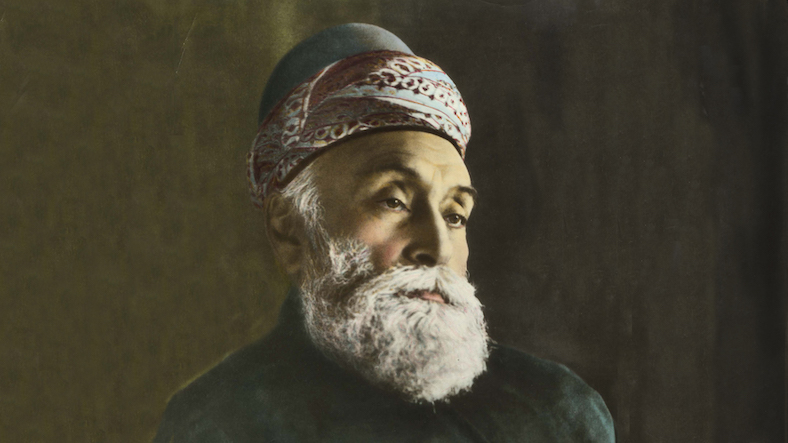
Jamsetji Nusserwanji Tata (1839–1904) is widely remembered as the Father of Indian Industry and the pioneer who laid the foundation of one of India’s greatest industrial empires — the Tata Group. A visionary who saw opportunity where others saw hardship, Jamsetji dedicated his life to building a modern, self-reliant India at a time when the country was under colonial rule and lacked industrial infrastructure.
From founding India’s first integrated steel plant to sowing the seeds for world-class educational and scientific institutions, Jamsetji’s contributions shaped India’s economic and social trajectory. His emphasis on ethics, nation-building and philanthropy continues to define the Tata legacy even today.
Early Life and Education
1. Birth and Background
Jamsetji Nusserwanji Tata was born on March 3, 1839, in Navsari, Gujarat, into a respected Parsi family known for integrity and community service. His father, Nusserwanji Tata, was a pioneering trader who inspired Jamsetji with early lessons on entrepreneurship and ethics.
2. Education and Early Exposure
He studied at Elphinstone College, Mumbai — one of the best educational institutions of the time. This exposure to Western education and global ideas shaped his thinking and instilled a deep desire for India’s industrial advancement.
Even before India had a real industrial base, Jamsetji had already begun to envision:
- Indian-owned large-scale enterprises
- Globally competitive industries
- An economically self-reliant nation
The Vision for Industrialization
India in the late 1800s depended heavily on British imports and had very little industrial development of its own. Jamsetji recognized that unless India built its own industries, true progress would remain out of reach.
His dream revolved around four major pillars:
- Steel – to build the backbone of modern India
- Hydropower – to generate clean, reliable energy
- World-class education – to empower Indians with scientific and technical knowledge
- Hospitality and global-standard infrastructure – to modernize Indian cities
These ideas later became the foundation of:
- Tata Steel
- Tata Power
- Indian Institute of Science (IISc)
- The Taj Mahal Palace Hotel
Founding of Tata Group
In 1868, Jamsetji Tata established Tata Sons, the parent company of what we know today as the Tata Group. Starting with a modest trading company, he rapidly diversified into textiles, manufacturing, energy, research, and education.
1. The First Major Venture – Textiles
Jamsetji founded a textile mill in Nagpur, which became a model for efficiency and modern technology. Unlike British mills, Jamsetji invested in workers’ welfare by providing:
- Good working conditions
- Washing and sanitation facilities
- Pension schemes
- Fair wages
This focus on ethical business was unheard of at the time and became a signature Tata value.
2. Entry into Hospitality – Taj Mahal Palace Hotel
Jamsetji’s dream to build a world-class hotel for Indians led to the creation of the Taj Mahal Palace in Mumbai. Opened in 1903, the hotel was designed to match international standards and symbolized Indian capability and sophistication.
The Unfinished but Legendary Dream – Tata Steel
Perhaps Jamsetji Tata’s most iconic dream was establishing India’s first integrated steel plant.
1. Why Steel?
Steel was the foundation for:
- Railways
- Industrial machinery
- Construction
- Military strength
Jamsetji believed that without steel, India could never become a modern nation.
2. Formation of Tata Iron and Steel Company
Although Jamsetji did not live to see the plant become operational, his vision led to the establishment of:
- Tata Iron and Steel Company (TISCO) in Jamshedpur (now called Tata Steel)
- India’s first planned industrial city, later named Jamshedpur in his honor
Tata Steel went on to become:
- The first major Indian industrial success
- A symbol of national pride
- One of the world’s leading steel producers
Philanthropy and Social Vision
Jamsetji Tata believed that "the community is not just another stakeholder, but the very purpose of our existence."
He is considered the pioneer of corporate philanthropy in India.
1. Tata Trusts
He laid the foundation for:
- J.N. Tata Endowment
- Tata Trusts
These trusts support:
- Higher education
- Research
- Rural development
- Healthcare
- Women’s empowerment
Today, Tata Trusts remain among India’s largest philanthropic bodies, contributing billions to social causes.
Google Ad 1
Contribution to Education and Science
Jamsetji’s passion for nation-building was incomplete without scientific and technological progress.
1. Indian Institute of Science (IISc)
Jamsetji envisioned establishing a research university that could:
- Empower India with scientific knowledge
- Produce world-class researchers
- Support industrial and economic development
This idea led to the creation of IISc Bengaluru, which later became one of the world’s leading scientific institutions.
2. Tata Institute of Fundamental Research (TIFR)
His commitment to science-inspired institutions eventually contributed to the formation of research hubs like:
- TIFR Mumbai
- Tata Memorial Hospital
- Tata Institute of Social Sciences (TISS)
These institutions shaped India’s leadership in science, medicine, and social sciences.
Values and Principles
Jamsetji Tata set standards that became the guiding principles of the Tata Group:
- Integrity
- Nation-first thinking
- Fair treatment of employees
- Focus on quality and innovation
- Commitment to social welfare
These values continue to define the Tata brand, making it one of the most trusted business groups in India and globally.
FAQs
1. Who was Jamsetji Tata?
Jamsetji Tata was an Indian industrialist, philanthropist and the founder of the Tata Group. He played a pioneering role in establishing India’s steel industry, power sector, hospitality sector and educational institutions.
2. What is Jamsetji Tata famous for?
He is best known for founding Tata Steel, Tata Power, the Taj Mahal Palace Hotel, and for laying the foundation of IISc, one of India’s premier research institutions.
3. What were Jamsetji Tata’s major contributions to India?
His contributions include:
- Establishing India’s first integrated steel plant
- Pioneering hydropower projects
- Founding world-class educational and scientific institutions
- Promoting ethical business and social welfare
4. Why is Jamsetji Tata called the Father of Indian Industry?
He earned this title because he built the foundation for large-scale industrialization in India, long before independence, in sectors such as steel, power, education and hospitality.
5. What is Jamsetji Tata’s legacy today?
His legacy lives on through the global Tata Group, Tata Trusts, IISc, TIFR and countless developmental initiatives that continue to shape India’s progress.
Conclusion
Jamsetji Nusserwanji Tata was not just an industrialist — he was a nation-builder. His courage, foresight and deep love for India transformed the country’s economic landscape. Every major project he envisioned — steel, power, research, industrial cities, world-class hotels — was designed to uplift India and empower its people.
Although he passed away in 1904, his vision continues to shape modern India through the Tata Group and the institutions he inspired. His life remains a testament to how one visionary leader can create generations of change.
Thanks for reading about this great personality on our Peoples Blog. For more such inspiring stories, explore more articles on our Peoples Blog.