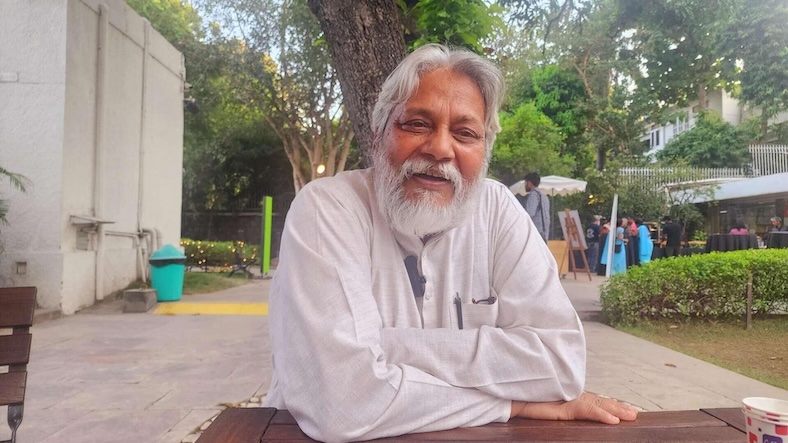
Rajendra Singh, widely known as the “Waterman of India,” is one of the most influential environmentalists and water conservation activists of modern India. His work has transformed the drought-prone regions of Rajasthan and revived rivers once declared dead. Through community-led water management, traditional harvesting techniques, and unwavering dedication, he has shown the country what sustainable environmental action truly looks like.
Early Life and Background
Rajendra Singh was born on August 6, 1959, in Daula village, Alwar district of Rajasthan. Growing up in a rural region where water scarcity was a harsh reality, he witnessed firsthand the challenges faced by farmers, women, and entire communities due to declining groundwater levels and frequent droughts. These early experiences shaped his sensitivity towards environmental issues.
1. Education and Early Interests
Rajendra Singh completed his education with a focus on Hindi literature, public health, and Ayurveda. Before entering the field of environmental conservation, he worked in the public health department. However, it was during his work in rural communities that he realized the extent to which lack of water hampered not only agriculture, but health, livelihoods, and overall quality of life.
This realization eventually led him to dedicate his life to water conservation.
A Turning Point: Moving to Rural Rajasthan
In the early 1980s, Rajendra Singh, along with a group of like-minded individuals, left city life and moved to the arid villages of Rajasthan. Their original aim was to work on health and education, but villagers pointed them to the root cause of all problems—water scarcity.
Without water, farming had collapsed, livestock was dying, and migration to cities had become a necessity. Seeing these conditions, Rajendra Singh decided to work on reviving traditional water systems.
This marked the beginning of a movement that would later change the landscape of Rajasthan.
Water Conservation Work: Reviving Traditional Systems
Rajendra Singh’s most significant contribution is the revival of johads, check dams, and traditional water harvesting structures. At a time when modern engineering overlooked traditional knowledge, Singh helped rediscover techniques that had been used successfully for centuries.
1. What are Johads?
Johads are small earthen dams used to collect and store rainwater. They help recharge groundwater and serve as an important water source during dry seasons.
2. Community Participation
One of Singh’s core beliefs is that water conservation cannot succeed without community involvement. He encouraged villagers to participate in building and maintaining johads, making them self-reliant rather than dependent on the government.
3. Rejuvenation of Rivers
Through repeated construction of johads and water harvesting structures, several rivers that had dried up began to flow again.
Some of the well-known rivers revived under his leadership include:
- Arvari River
- Sahibi River
- Rooparel River
- Sarsa River
These rivers, once considered dead, now support agriculture, wildlife, and daily human needs in the region.
Tarun Bharat Sangh: Building a People-Led Water Movement
In 1975, Rajendra Singh co-founded Tarun Bharat Sangh (TBS), an NGO committed to rural development, environmental conservation, and water management. Under his leadership, TBS has built thousands of water harvesting structures across Rajasthan.
1. Key Initiatives by Tarun Bharat Sangh
- Rejuvenation of more than 1,000 villages
- Construction of over 10,000 johads and check dams
- Restoration of ecosystem balance in drought-affected regions
- Empowering local communities to become guardians of water resources
- Promoting sustainable agricultural practices
Tarun Bharat Sangh’s work became a blueprint for water restoration efforts across India.
Impact on Environment and Society
Rajendra Singh’s approach has had significant environmental, social, and economic impact.
1. Environmental Impact
- Rise in groundwater levels
- Improved soil fertility
- Revival of rivers and lakes
- Increased biodiversity
2. Social Impact
- Migration reduced significantly
- Women spent less time walking long distances to fetch water
- Villages became self-sufficient
- Conflicts over water reduced
3. Economic Impact
- Agriculture revived in drought-hit areas
- New livelihoods emerged
- Farmers gained higher income and stability
His work has helped transform barren lands into green, productive fields.
Google Ad 1
Awards, Honors, and Recognition
Rajendra Singh’s remarkable contributions have been acknowledged nationally and internationally.
- Ramon Magsaysay Award (2001) – for community leadership in water conservation
- Stockholm Water Prize (2015) – often called the "Nobel Prize for Water"
- Jamnalal Bajaj Award
- Guardian's list of Top 50 People Changing the Planet
These recognitions showcase the global significance of his work.
Advocacy, Public Awareness, and Policy Influence
Apart from fieldwork, Rajendra Singh is a passionate advocate for sustainable water management. He regularly speaks at national and international platforms on topics such as:
- Community-driven water conservation
- Climate change and its impact on water cycles
- Protection of rivers from pollution and exploitation
- Traditional water wisdom and heritage
- Water security policies for rural India
His advocacy has influenced several water policies and inspired environmental movements across the country.
Legacy: Inspiring a Global Water Movement
Rajendra Singh’s work shows that sustainable change begins at the grassroots level. His philosophy combines:
- Traditional wisdom
- Community ownership
- Ecological understanding
- Long-term sustainability
Today, his methods are studied worldwide and replicated in many countries facing water scarcity.
Schools, colleges, government officials, and international environmental groups continue to learn from his model of river rejuvenation and community-led conservation.
FAQs About Rajendra Singh
1. Why is Rajendra Singh called the “Waterman of India”?
He earned this title for his pioneering work in reviving rivers and promoting water conservation in Rajasthan.
2. What is Rajendra Singh’s biggest contribution?
His biggest contribution is the revival of traditional water harvesting systems like johads and rejuvenation of several dried-up rivers.
3. When and where was Rajendra Singh born?
He was born on August 6, 1959, in Alwar district, Rajasthan.
4. What is Tarun Bharat Sangh?
Tarun Bharat Sangh is an NGO co-founded by Rajendra Singh, working on water conservation, rural development, and environmental sustainability.
5. What major awards has he received?
He has received the Ramon Magsaysay Award (2001) and the Stockholm Water Prize (2015), among many others.
Conclusion
Rajendra Singh’s journey from a young social worker to the “Waterman of India” is a powerful example of how one person’s dedication can transform entire regions. His work has revived rivers, improved livelihoods, and restored dignity to thousands of rural communities.
Through Tarun Bharat Sangh and his tireless efforts, he has proven that sustainable water management is not just possible but essential for India’s future. His legacy continues to inspire individuals and organizations to take responsibility for protecting natural resources and building a more sustainable world.
Thanks for reading the article, for more great peoples related articles read our peoples blog articles.


