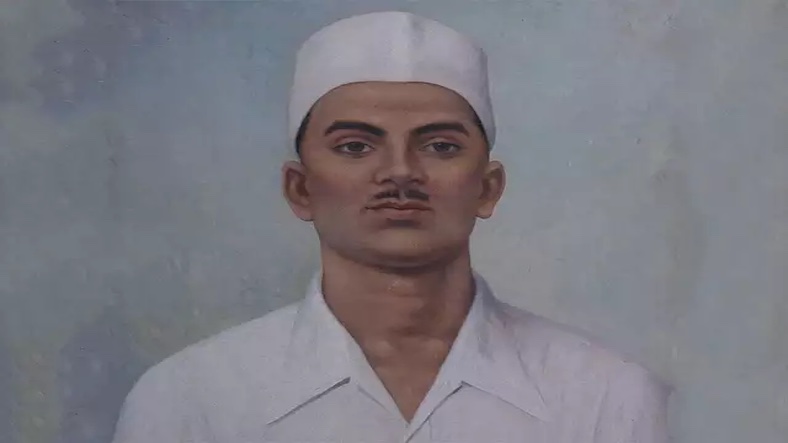
Sukhdev Thapar (1907–1931) was one of India’s most respected revolutionaries, remembered for his courage, patriotism and unwavering dedication to the freedom struggle. As a key member of the Hindustan Socialist Republican Association (HSRA), he worked closely with Bhagat Singh and Shivaram Rajguru and played a crucial role in shaping the revolutionary movement against British rule.
Early Life and Background
Sukhdev Thapar was born on May 15, 1907, in Ludhiana, Punjab. Growing up in a family involved in the freedom movement, he developed a deep sense of patriotism at a young age. His environment encouraged him to question injustice and British oppression, shaping his commitment to India’s independence.
1. Education at National College, Lahore
Sukhdev completed his education at National College, Lahore, an institution founded by Lala Lajpat Rai to promote nationalist ideas.
Here, he met Bhagat Singh and other young revolutionaries and soon became an active participant in student-led movements against the British Raj.
Entry into the Revolutionary Movement
1. Joining the HSRA
Sukhdev joined the Hindustan Socialist Republican Association (HSRA), a revolutionary organization that believed in achieving independence through direct action, armed resistance, and socialist principles.
He quickly emerged as one of the prominent planners within the group, known for his sharp mind, discipline, and leadership abilities.
2. Key Revolutionary Activities
Sukhdev played a major role in organizing protests, distributing revolutionary literature, and preparing youth to resist British rule.
He also participated in several planned actions aimed at exposing government oppression.
Role in the Lahore Conspiracy Case
One of the most significant events in Sukhdev Thapar’s life was his involvement in the Lahore Conspiracy Case.
1. Assassination of J.P. Saunders
After the death of Lala Lajpat Rai due to police brutality during a protest, Sukhdev, Bhagat Singh, and Rajguru planned an act of retaliation.
On December 17, 1928, they assassinated British police officer J.P. Saunders, believing him to be responsible for the lathi charge that led to Rai’s death.
2. Arrest and Trial
The three revolutionaries were later arrested and tried in the Lahore Conspiracy Case. The trial drew nationwide attention and highlighted the cruelty of colonial rule.
Despite strong public support, the court sentenced all three to death.
3. Martyrdom
On March 23, 1931, Sukhdev, Bhagat Singh, and Rajguru were executed at Lahore Central Jail.
This date is now commemorated as Shaheed Diwas, honoring the trio’s bravery and sacrifice.
Ideology and Vision
Sukhdev Thapar was heavily inspired by socialist and egalitarian principles. He believed:
- India’s freedom must go hand-in-hand with social and economic equality.
- Youth should take responsibility for building a just society.
- Blind obedience to colonial authority must be rejected.
His rational, organized, and forward-thinking approach made him one of the intellectual pillars of the HSRA.
Google Ad 1
Legacy and Commemoration
Sukhdev Thapar’s life and sacrifice made him an enduring symbol of courage. His legacy continues in many ways:
- Schools, colleges, and public institutions are named in his honor.
- Statues and memorials across India commemorate his patriotism.
- He remains a source of inspiration for young Indians committed to justice and equality.
Together with Bhagat Singh and Rajguru, Sukhdev is remembered as one of the most influential revolutionaries of the Indian independence movement.
FAQs About Sukhdev Thapar
1. Who was Sukhdev Thapar?
Sukhdev Thapar was an Indian revolutionary, freedom fighter, and a key member of HSRA who fought against British colonial rule.
2. What was Sukhdev’s role in the freedom movement?
He played a major role in planning revolutionary activities, organizing youth, and participating in the assassination of J.P. Saunders in the Lahore Conspiracy Case.
3. When was Sukhdev Thapar born?
He was born on May 15, 1907, in Ludhiana, Punjab.
4. When was he executed?
Sukhdev, Bhagat Singh, and Rajguru were executed on March 23, 1931.
5. Why is Sukhdev remembered today?
He is honored for his bravery, sacrifice, and commitment to creating an independent and just India.
Conclusion
Sukhdev Thapar’s dedication, strength, and selflessness represent the spirit of India’s freedom struggle. His role in the Lahore Conspiracy Case, leadership within HSRA, and ultimate sacrifice at the age of just 23 continue to inspire generations.
His story stands as a powerful reminder of the young revolutionaries who fought fearlessly to secure India’s independence.
Thanks for reading the about this great personality on our peoples blog, for more such great people read our peoples blog articles.


