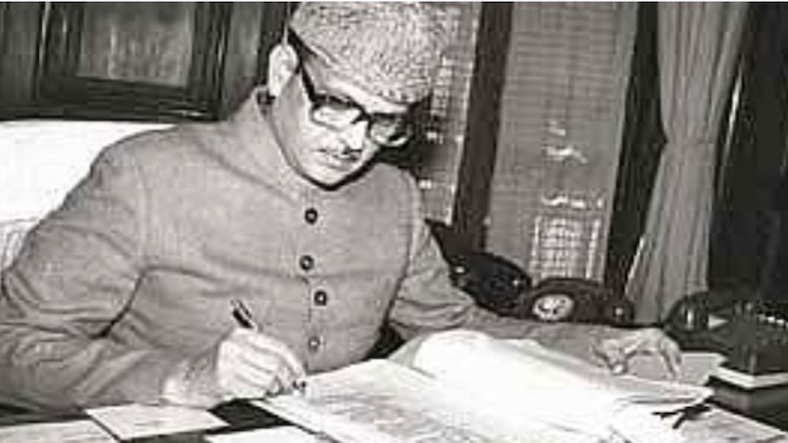
Vishwanath Pratap Singh, popularly known as V. P. Singh, was an Indian politician, freedom thinker and social justice advocate who served as the 7th Prime Minister of India from 1989 to 1990. He is best remembered for implementing the Mandal Commission recommendations, a move that permanently changed India’s social and political landscape by expanding reservations for the Other Backward Classes (OBCs).
Despite serving for only 11 months as Prime Minister, V. P. Singh’s impact on Indian society, politics and governance remains strong and widely discussed even today.
Early Life and Background
1. Birth and Family
V. P. Singh was born on June 25, 1931, in Allahabad (now Prayagraj), which was then part of British India.
He belonged to a royal family; he was adopted into the ruling family of Manda, located near Allahabad. His royal background gave him access to education, culture and leadership from an early age.
2. Education
V. P. Singh completed his schooling in Allahabad and later studied at Allahabad University, one of the most respected educational institutions in India.
He also continued his studies at the University of Pune.
His educational exposure built a strong foundation in administration, public policy and governance, which greatly influenced his later political career.
Early Career in Civil Service
Before entering politics, V. P. Singh worked in the Indian Administrative Service (IAS). He joined the IAS in 1957, a prestigious achievement at that time.
During his service, he held important administrative roles and gained experience in governance, rural development and public welfare. His time as an IAS officer helped him understand India’s deep-rooted social and economic issues.
Entry into Politics
1. Joining the Indian National Congress
V. P. Singh entered active politics in the 1960s by joining the Indian National Congress, which was the ruling party at that time. His leadership qualities quickly brought him into important positions.
2. Chief Minister of Uttar Pradesh
One of his significant early roles was becoming the Chief Minister of Uttar Pradesh in 1980.
During his tenure, he focused on:
- improving law and order,
- strengthening administration, and
- implementing land reforms.
3. Land Reform Efforts
As Chief Minister, V. P. Singh worked to ensure fair land distribution to reduce inequality between landlords and poor farmers. These efforts aimed to uplift rural communities, promote equality and reduce poverty.
Even though these reforms faced resistance, they helped establish his reputation as a leader committed to justice and equality.
Rise in National Politics
1. Minister of Commerce
V. P. Singh held several key roles in the Indian government. Before becoming Finance Minister, he served as the Commerce Minister, where he worked on improving India’s trade policies, exports and industrial growth.
2. Finance Minister of India (1984–1987)
Under Prime Minister Rajiv Gandhi, V. P. Singh served as Finance Minister from 1984 to 1987. His tenure is remembered for:
- Anti-corruption drive
He launched strong campaigns against corruption, including raids on big industrial houses. This increased his popularity but also created friction within the Congress leadership. - Reducing government spending
He focused on controlling unnecessary government expenditure. - Strengthening the banking and financial system
V. P. Singh introduced tighter financial rules and promoted transparency.
His anti-corruption work eventually caused disagreements within the government, leading to his resignation in 1987.
Becoming Prime Minister of India
The 1989 General Elections
After leaving Congress, V. P. Singh became a major figure in the Janata Dal, which later formed a coalition called the National Front. His popularity and clean image helped the alliance win the 1989 elections.
He became the 7th Prime Minister of India on December 2, 1989.
Google Ad 1
Key Contributions as Prime Minister
Although V. P. Singh served for less than a year, his government introduced major reforms and policy changes.
1. Implementation of the Mandal Commission (1990)
The Mandal Commission was formed in 1979 to identify India’s socially and educationally backward communities.
However, its recommendations were not implemented for over a decade.
In August 1990, V. P. Singh announced that his government would implement the report, which provided 27% reservation for OBCs in central government jobs.
Impact:
- It gave millions of OBC citizens greater access to jobs and opportunities.
- It sparked widespread protests and political debate.
- It permanently changed India’s social and political system.
Even though controversial, this move made V. P. Singh a strong symbol of social justice and equality.
2. Economic Measures
- Reduced unnecessary government expenses
- Encouraged early forms of economic liberalization
- Focused on stabilizing the financial system
These reforms helped India move slowly toward modernization.
3. Focus on Social Justice and Human Rights
V. P. Singh often spoke about the need for equality, dignity and fair opportunities for all sections of society. He wanted India to reduce caste-based discrimination and empower marginalized communities.
Challenges and Controversies
1. Political Pressure and Protests
The Mandal Commission announcement led to nationwide protests, including student agitations and violent incidents.
This created a politically unstable environment.
2. Internal Conflicts
Coalition politics made governance difficult. The government depended on support from various parties, especially the BJP and Left allies.
2. Ayodhya Dispute
During his term, tensions related to the Ram Janmabhoomi–Babri Masjid dispute escalated, adding to political pressure.
Resignation and Later Political Life
V. P. Singh resigned on November 10, 1990, after losing the majority in Parliament when his coalition partners withdrew support.
After his resignation:
- He remained active in public life
- Formed a new political party, Jan Morcha
- Continued speaking about social issues, equality, and injustice
- Participated in activism for farmers and marginalized groups
He never returned to power but stayed respected as a moral and social voice.
Personal Life
V. P. Singh was known for his simple lifestyle and honesty.
Despite being from a royal background, he lived modestly and believed in serving society.
He passed away on November 27, 2008, in New Delhi.
Legacy of V. P. Singh
1. Champion of Social Justice
The implementation of the Mandal Commission remains his biggest legacy. It transformed India’s reservation system and expanded opportunities for millions of OBC citizens.
2. Anti-Corruption Crusader
His actions as Finance Minister showed his commitment to transparency.
3. Honest and Ethical Leadership
Even political opponents respected him for his integrity.
4. Impact on Indian Politics
His decisions reshaped caste politics and led to the rise of OBC leadership across India.
Conclusion
Vishwanath Pratap Singh was a leader who believed in fairness, equality and justice. His political journey—from an IAS officer to Chief Minister, Finance Minister and finally Prime Minister—reflects his dedication to public service.
His decision to implement the Mandal Commission marked a turning point in Indian history, bringing major social changes. Although his time as Prime Minister was short and full of challenges, his influence continues to shape Indian politics today.
Thanks for reading about this great personality on our Peoples Blog. For more inspiring stories of historical figures and leaders, explore our other Peoples Blog articles.