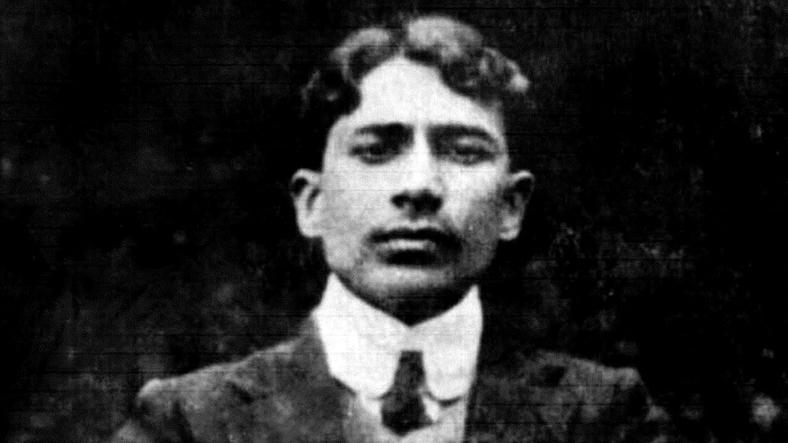
Madan Lal Dhingra (1883–1909) is remembered as one of the earliest and most fearless revolutionaries of India’s freedom struggle. Although his life was short, his courage, sacrifice, and commitment to India’s independence left a deep mark on the nation’s history. His assassination of a British official in London sent shockwaves across the British Empire and inspired thousands of young Indians to rise against colonial rule.
This article explores his life, motivations, revolutionary activities, and the powerful legacy he left behind.
Early Life and Family Background
Madan Lal Dhingra was born on 18 September 1883 in Amritsar, Punjab, during British rule in India. He belonged to a respected middle-class Punjabi Hindu family. His father, Dr. Ditta Mal Dhingra, was a well-known civil surgeon and held a high position under the British administration. The family was financially comfortable and had good social standing.
Despite being part of a loyalist family that worked closely with the British government, Madan Lal Dhingra developed a strong sense of patriotism from a young age. He was deeply affected by the condition of Indians who were treated as inferior in their own land. This early exposure to inequality planted the seeds of rebellion in his mind.
Education and Growing Nationalism
Dhingra completed his schooling in Amritsar and then moved to Lahore for higher studies. In Lahore, he was exposed to political debates, student movements, and early nationalist ideas. These experiences helped strengthen his belief that India needed strong action—not just petitions—to gain freedom from British rule.
However, his real transformation began when he left India.
1. Journey to England
In 1906, Madan Lal Dhingra traveled to London to pursue a degree in Mechanical Engineering at University College London (UCL). His family hoped that higher education abroad would secure him a stable job and future.
But in London, he found something more powerful than a degree: an organized, motivated circle of Indian revolutionaries who were ready to fight for independence.
Influence of Revolutionary Groups in London
During the early 1900s, London became a central hub for Indian political activism. Many young Indians gathered there to discuss independence, publish revolutionary writings, and plan resistance against British rule.
Dhingra became closely associated with several revolutionary leaders.
1. Association with Vinayak Damodar Savarkar
One of the biggest influences on Dhingra’s revolutionary path was Veer Savarkar, a bold nationalist who openly criticised British rule and encouraged armed resistance. Savarkar led the India House in London, a hostel that became the training ground for several freedom fighters.
Under Savarkar’s mentorship, Dhingra learned about:
- armed struggle
- revolutionary ideology
- India’s long history of resistance
- the need for self-sacrifice
This period changed his entire outlook. He began to believe that peaceful protests alone would not free India. Instead, he felt that direct action against British authorities was necessary.
The Path to Assassination
By 1909, nationalist sentiments had reached a boiling point among Indians living in London. Many were unhappy with the increasing brutality of the British government in India, including the use of violence to crush protests and imprison young activists.
1. Who Was Sir William Hutt Curzon Wyllie?
Sir Curzon Wyllie was a senior British official who previously served in India and continued to influence Indian affairs even after returning to London. He was known for his strong support of British control over India and for monitoring Indian students abroad. Many revolutionaries considered him a symbol of colonial repression.
2. The Decision
Madan Lal Dhingra believed that eliminating a powerful figure like Curzon Wyllie would send a strong message to the British government and the world. He wanted to prove that young Indians were willing to sacrifice their lives for freedom, even on foreign soil.
The Assassination: 1 July 1909
On the evening of 1 July 1909, the Imperial Institute in London hosted an event attended by British officers and Indian dignitaries. Dhingra entered the venue with a revolver hidden in his pocket.
When Curzon Wyllie arrived, Dhingra walked up to him and fired several shots at close range. Wyllie died instantly. In the process, another guest, Dr. Cawas Lalcaca, also lost his life while trying to intervene.
Dhingra made no attempt to escape. He calmly stood there until the police arrested him. His intention was not only to strike a blow against the British Empire but also to demonstrate fearlessness.
Google Ad 1
Trial and Powerful Court Statements
After his arrest, Madan Lal Dhingra faced a swift trial. He surprised the court by openly admitting that he had committed the act. He refused legal assistance from British lawyers, claiming that they belonged to a nation that was oppressing his people.
In one of his statements, he said that he had acted for the cause of his motherland and did not regret his decision. His confident and courageous words became famous and were later smuggled into India to inspire others.
He said that if he had a thousand lives, he would sacrifice all of them for India's freedom.
Execution at Pentonville Prison
Dhingra was convicted of murder and sentenced to death. On 17 August 1909, at just 26 years old, he was executed by hanging in Pentonville Prison, London.
His death brought sadness to many Indians, but it also sparked pride, admiration, and revolutionary spirit across the country. His sacrifice became a symbol of bravery in the face of colonial power.
Reactions in India and Abroad
The assassination shocked the British government, but it energized Indian revolutionary movements.
1. In India:
- Newspapers secretly praised his courage.
- Students and young activists were inspired to join underground groups.
- His act added strength to the growing belief that independence required bold action.
2. Among Indian revolutionaries abroad:
- Leaders like Savarkar hailed him as a martyr.
- His writings and statements spread across Europe and reached India through secret networks.
- Many revolutionaries considered him the first Indian to sacrifice his life on foreign soil for freedom.
Legacy of Madan Lal Dhingra
Even though he lived only 26 years, his contributions continue to influence India’s freedom narrative.
1. Symbol of Courage
Dhingra became a national hero whose bravery inspired countless young Indians, including later revolutionaries involved in movements led by Bhagat Singh and other freedom fighters.
2. Early Voice of Armed Resistance
Before the more organized revolutionary groups were formed, Dhingra showed that Indians were ready to challenge British power even outside India.
3. Inspiration for Future Generations
His story is still studied in schools, colleges, and history circles. His life encourages young people to stand up for justice and to fight against inequality.
4. Influence on Revolutionary Literature
Many books, poems, and articles were written about him, praising his unconditional love for the motherland.
Why Madan Lal Dhingra Matters Today
In modern India, Dhingra’s story is not just about violence or rebellion. It is about:
- courage in the face of injustice
- dedication to the greater good
- the power of sacrifice
- the importance of self-belief
- standing firm for principles
At a time when Indians were denied basic rights, he chose to give up his life for the hope of a free nation.
Conclusion
Madan Lal Dhingra was one of the earliest and most courageous revolutionaries of the Indian independence struggle. His life showed that freedom often requires bold action, sacrifice, and a strong belief in justice. His assassination of Curzon Wyllie shook the British Empire and awakened a new wave of nationalism in India.
More than a century later, Dhingra remains a proud symbol of India’s fight for independence. His story continues to inspire people to stand up for truth, fairness, and the rights of the oppressed.
For more articles on inspiring personalities and freedom fighters, explore the other stories on PeoplesBLOG.





![OnePlus Buds Pro 3 Bluetooth TWS in-Ear Buds - Dual Drivers, Dual DACs, Dynaudio EQs, Up to 50dB Adaptive Noise Cancellation, Up to 43Hrs Battery [Lunar Radiance]](https://m.media-amazon.com/images/I/61dVOVxHn3L._SX679_.jpg "OnePlus Buds Pro 3 Bluetooth TWS in-Ear Buds - Dual Drivers, Dual DACs, Dynaudio EQs, Up to 50dB Adaptive Noise Cancellation, Up to 43Hrs Battery [Lunar Radiance]")