A paper bridge experiment is one of the simplest and most effective ways to teach children about engineering, structural strength, problem-solving, and creativity. Using only sheets of paper, scissors, and small objects for testing, children can explore how real bridges are designed and built. This fun science activity helps them understand how shapes, structures, and forces work in the real world.
This detailed article explains how to conduct a complete “Paper Bridge” science experiment for kids. It includes materials, step-by-step procedures, scientific explanations, design ideas, observations, and learning outcomes. The activity is suitable for children at home, in classrooms, in science clubs, or as part of a school science fair.
Why the Paper Bridge Experiment Is Useful for Children
This experiment is more than a craft activity. It teaches many important concepts, such as:
- How structures support weight
- How forces act on objects
- How shapes can make structures stronger
- How engineers design bridges
- How problem-solving improves designs
- How repeated testing leads to better results
Children learn through trial and error. When they build a bridge that collapses or bends, they naturally try a new design. This helps them think like real engineers.
Concept of Structural Strength
Before starting the experiment, explain what structural strength means.
Structural strength is the ability of an object or structure to support weight without bending, breaking, or collapsing. Real bridges—such as arch bridges, beam bridges, suspension bridges, and truss bridges—are designed to distribute weight evenly so they can carry vehicles and people safely.
In this activity, the goal is to understand:
- How paper can become strong
- How folding, layering, or shaping paper changes its strength
- How weight distribution affects stability
- How design choices influence performance
Materials Needed
You do not need expensive materials for this experiment. Simple items found at home or school will work.
- Sheets of paper (printer paper, construction paper, or colored paper)
- Scissors
- Ruler
- Books, small toys, or coins for weights
- Optional: Tape or glue for reinforcement
- A flat table or two supports to form the gap for the bridge
All materials are safe for children, but adults should assist younger children when using scissors.
How to Perform the Paper Bridge Experiment
Here is the complete step-by-step procedure.
1. Introduce the Idea of Bridge Design
Start by discussing the importance of strong bridges.
Ask children questions like:
- Why do bridges need to be strong?
- What happens if a bridge is weak?
- Have you seen different types of bridges in real life?
Explain that engineers use shapes like triangles, arches, and beams to make bridges stronger. This gives children a foundation for understanding their own paper bridge creations.
2. Challenge the Children to Design a Bridge
Present a challenge similar to what real engineers face:
“Build a bridge using only sheets of paper that can hold the most weight.”
Encourage children to:
- Think creatively
- Consider different shapes
- Sketch their ideas
- Try multiple designs
Let them observe real-life bridges in photos or books for inspiration.
3. Brainstorming and Planning
Before starting construction, allow children to draw simple designs on paper.
Some ideas include:
- Flat beam bridge
- Folded bridge with accordion-style paper
- Arch-shaped bridge
- Truss bridge using triangular shapes
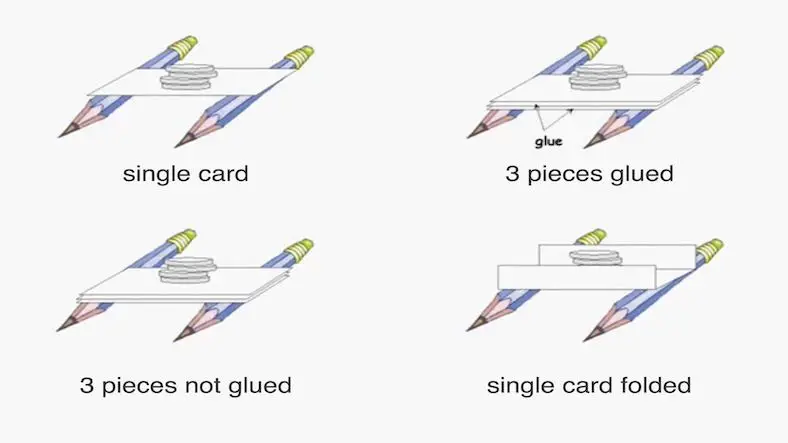
- Layered bridge with multiple pieces of paper
Brainstorming encourages critical thinking and improves their design approach.
Google Ad 1
4. Build the Paper Bridge
Now, begin constructing the bridge.
Common bridge designs children can try:
1. Beam Bridge:
A simple flat sheet of paper placed across two supports. Children will notice it bends easily.
2. Folded Beam Bridge:
Fold the paper into a fan or accordion shape. This dramatically increases strength because the folds distribute weight more evenly.
3. Arch Bridge:
Curve a sheet of paper into an arch. Arches naturally redirect weight downward and outward, making them stronger.
4. Truss Bridge:
Cut strips of paper and form triangles by taping or slotting them together. Triangles are the strongest shape used in engineering.
5. Layered Bridge:
Use two or three sheets layered on top of each other to test the difference in strength.
Encourage minimal use of tape or glue. The goal is to rely mostly on the paper’s structural strength.
5. Testing the Bridge’s Strength
Place the bridge between two supports, such as stacks of books. The gap should be wide enough to test stability but not too wide that the bridge collapses immediately.
Use small objects as weight:
- Coins
- Small toys
- Erasers
- Small books
Start with light objects and increase the weight slowly.
Ask children to observe:
- How much weight the bridge can hold
- How the bridge bends or reacts
- Whether certain areas seem weaker
This step makes the experiment exciting, as children enjoy testing how strong their bridge is.
6. Observe, Measure, and Record
Teach children to treat this as a science project by recording results.
Ask them to note:
- Which bridge design held the most weight
- How many books or coins the bridge supported
- What shape or pattern made the bridge stronger
- Which areas failed first and why
This step introduces scientific observation and data collection skills.
7. Improve the Design
If the bridge collapses early, encourage children to try again with a better design.
They can:
- Add more folds
- Reinforce weak spots
- Change the shape
- Use different types of paper
- Create stronger support systems
Explain that engineers often redesign bridges many times before construction.
Scientific and Engineering Concepts Learned
This experiment teaches several important real-world principles.
1. Weight Distribution
A strong bridge spreads weight evenly across its surface. When weight is concentrated in one area, the bridge bends or collapses.
2. Shapes Increase Strength
Triangles, arches, and folds increase strength by redirecting forces.
- Triangles are the strongest shape in engineering.
- Arches push weight outward and downward.
- Folds stiffen the paper and prevent bending.
3. Compression and Tension
Explain that:
- Compression is the force that pushes materials together.
- Tension is the force that pulls materials apart.
A good bridge handles both forces effectively.
4. Material Properties
Even something weak like paper can become strong with proper design. This teaches children to think about materials creatively.
5. Problem-Solving Skills
Children learn to:
- Test
- Observe
- Improve
- Try again
These are core scientific thinking skills.
Safety Considerations
- Supervise young children when using scissors.
- Do not place heavy objects that may fall or cause injury.
- Keep the experiment area clean to prevent accidents.
The activity is safe as long as it is supervised properly.
Conclusion
The Paper Bridge Science Experiment is an excellent activity for children to learn engineering principles in a simple and enjoyable way. It encourages creativity, teaches scientific thinking, and helps children understand the importance of structural strength. By experimenting with shapes, folds, and designs, children gain a deeper understanding of how real bridges are made and why they stay strong under pressure.
This activity is simple, fun, cost-effective, and highly educational. Whether you are a parent, teacher, or student, the paper bridge experiment provides a meaningful learning experience that children will remember and enjoy.
Thank you for reading the article. For more science and technology-related articles, explore and subscribe to PeoplesBLOG.